Always looking to the past ~ A journey into the lives of Sir Thomas and Lady Lucille Sharpe.
[MATURE AUDIENCE ONLY: Trigger warnings apply]
Feedback is always welcome.
Chapter 1 here
Chapter 2 here
Chapter 3 below~
CRIMSON PEAK REVISITED
CHAPTER 3
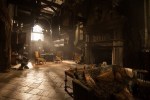
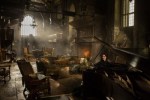
Lucille stifled her gasp of pain as she removed her clothes
and pulled on her nightgown. She could barely raise her arms and her back felt
like kneaded bread dough, but her physical pain was small compared to her
heartache. Theresa, the source of all joy and love in their lives, was gone.
She hadn’t even been allowed to say goodbye. After Mother had meted out her
punishment and chased away their nurse, she had left them upstairs, locked in
their nursery bedroom with the declaration that they would not receive meals
that night, and if they wished to have them tomorrow, they had better behave.
Throughout the whole ordeal, Lucille hadn’t uttered a word nor shed a tear,
even after the door had shut them in together, alone. She felt like an empty
shell of a thing; it was as if something precious and hopeful within her had
died, and was now just trampled and ruined.
Thomas rubbed his tearful eyes and sniffled. “I want
Theresa,” he whimpered. He didn’t protest as Lucille led him to his bed,
undressed him and put him in his night shirt. “How could Mama send her away? We
need her.”
“Theresa is gone,
Thomas. It is just you and I now.” Lucille sighed as Thomas’ eyes filled with
tears once more. “It doesn’t matter; she would have left soon in any case. You
aren’t a baby anymore; she’s got her own family that will need her more.”
“That’s not true!” Thomas contradicted. “We’re her family.
She’s ours.”
“Don’t be silly,” Lucille insisted. “Anyway, there’s nothing
we can do about it, either way. Since we aren’t having tea or supper, we should
just go to bed.”
“We’ll die up here,” Thomas predicted. “We’ll starve to
death. They’ll just lock it all up and leave and forget all about us.”
“No, they won’t. You’re the heir to Allerdale Hall; they
shan’t lose you. And we’re together, aren’t we? It’s not all that bad, so long
as we have each other.”
“Everyone says I’m perfect, sister, but I’m not; I’m awfully
wicked! I ran in the hall and broke the jar, not you. Oh, why did you lie,
Lucille? Didn’t it hurt?”
Lucille grimaced. Of course it hurt, but she wouldn’t admit
it to anyone, especially her beloved little brother. She lifted his quilt and
Thomas slid inside. The quarrelsome sound of their parents had begun to drift
into the nursery from below, their angry words beginning once again. It was a
weird cacophony of noise, and it reminded Lucille of the storm and its raging
thunder. Stiffly she slid under her own covers, rolling onto her belly.
“Lucille?”
“What is it, little brother?”
“Would you tell me a story?”
Lucille sighed. “I haven’t the head for it tonight,
sweetest. How about I sing to you instead, hm?”
“All right,” Thomas nodded.
Softly Lucille began to sing Theresa’s old lullaby,
repeating it over and over. By the time she came to just hum it wordlessly,
Thomas was fast asleep again in that innocent, babyish way he had. No doubt he’d
be awake before the sun rose, but Lucille didn’t care. There was nothing to
look forward to tomorrow. It was only then that her tears welled up and her
sorrow burst from her as she stifled her sobs into her pillow.
**
As she anticipated, the siblings weren’t forgotten in their
nursery, but they were neglected. To Lucille it felt like a return to life
before Thomas, with whichever available servant tending to their physical needs
and them being told to behave and stay out of the way. For weeks Lucille would
cry herself to sleep, aching for her lost Theresa. However, Lucille was older,
and she had someone on which to focus her attention and affection: her brother,
Thomas.
Oddly enough, the parental neglect allowed them more freedom
than they ever had, so long as they didn’t interfere with the rest of the
household. It was wonderful during good weather, for they were bundled up and
sent out of doors with the admonishment to Lucille to look after her cherished
brother. They would roam all over the estate, walking or riding Lucille’s pony.
They collected little bits of flora and fauna and even played in the Roman
ruins half-buried in the hills. They were forbidden to form any friendships with
the servants, although Lucille continued her domestic sessions in the kitchens
on baking days. She continued making her little cosmetic concoctions and
transmitted to Thomas the herb lore Theresa had imparted to her. Thomas also
learned his letters and numbers quickly, and proved he was quite crafty
constructing makeshift toys and other distractions for them during the times
when they remained indoors in the nursery.
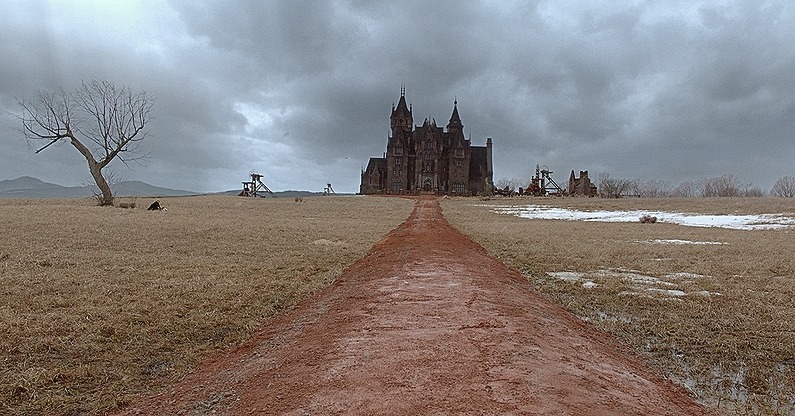
A fresh vein of clay was found on the estate, as close to
the house as to be right under the gardens by the kitchen. Soon the driveway
was dotted with activity, a kiln built to the side of the stately house, with a
constant flow of industrial traffic. The children were never allowed in the
mines themselves, of course, and they were warned away from the muddy holding
pits, even though they could see the rows of local children, some even as young
as they were, descending into the mines day after day, to work on excavating.
They mourned the loss of the trees and gardens, but merely ventured farther
a-field, and learned to fashion bits of pottery of their own out of the deep
red clay. It stained their hands and they came to love the sensation of it: the
scent, the various textures, even the taste of the iron-rich material.
They observed the world of people outside their nursery with
a distant curiosity, like Rapunzel in her tower. The parties at Allerdale Hall
became all the more extravagant, more elaborate dinners and dances, but they
only glimpsed at all the finery from their eyrie, muted music and festivities
filtering up to them from below. For the most part the children didn’t care
that they were excluded; they were content to live their lives together,
separate from the realm of their parents and other adults.
Despite the lack of constant supervision, Lucille and Thomas
were still given some instruction in proper manners in a haphazard way. Perversely
they weren’t provided with a governess for several years; Lucille took this as
yet another spiteful insult from their parents. She was nearly eight years old,
and Thomas six years old, when they were informed that a tutor had been hired
to see to Thomas’ education at Allerdale. Lucille was pleased to learn that she
would be allowed to attend during the tutor’s instruction provided she behaved,
and she was to be given lessons in areas suited for a lady: music, watercolor
painting, poetry and French. Lucille
suspected it wasn’t due to any newfound parental concern that they were
provided with a formal education; rather, it was due to Mother’s pressure and
Father’s increasing wealth and prestige. She didn’t care what was the motive:
Lucille in particular wished to become the perfect little lady, for then she
could show everyone, from her parents to the high society of the guests, that
she was just as worthy of the Sharpe name as her adored brother.
Perhaps the tutor had expected less of his students due to
their previous lack of formal instruction; they soon proved him wrong. Thomas
was a quick and clever student and Lucille even more so, although she was not
allowed to actively participate in any way. The siblings were serious and
dedicated in their studies. Determined to impress their parents and being
gifted with a superior intellect, they excelled.
Yet all their efforts were in vain. Father never had any
patience for anything domestic, and was abroad all the more. Mother remained in
residence more often, however, and Lucille did not escape her notice. Instead
of bestowing long sought after praise on her daughter, Beatrice instead
criticized her, bitterly announcing that all her wit, charm and talent would
amount to nothing. “What good does intelligence and graces do for a woman, if
they are unable to serve her well in life? You are far too willful and
sensitive a girl to make a proper wife. Not that your father would ever see fit
to arrange for a proper union; he would not furnish you with a dowry in any
case, should there be anything left from all his frivolous expenses when you
come of age. It is all for Thomas. Resign yourself to spinsterhood, girl; would
that I had!”
The meaning behind such cruel words was soon apparent: items
were soon missing from the house, and then came a reduction of the staff at
Allerdale Hall. It did not take long for Lucille to discover the truth: Father
had gambled too greatly. His investments overseas had failed to show profit;
their wealth had been greatly reduced. Sir James was now depleting his house of
its fine trinkets and depriving his family. There were to be no more parties,
no more dinners. Despite the loss, Sir James drove his workers to increase
production, urging them to delve deeper and extract more and more from the clay
mines; he was almost a demon in his frenzy. Nothing appeared capable of
stopping him: weather, time, or safety was of no concern to him. It was
inevitable that tragedy would occur.
The first snows of winter had fallen, and the mines should
have been closed for the season. Sir James had returned from months abroad, and
had not only refused to shut them down, but worked the miners day and night
with a furious drive bordering on mania. They were digging deep beneath the
white blanketed surface, a mass of humanity that quickly began to look like soldiers
fighting a bloody battle, stained with the crimson clay residue. There was a
rumble and roar, as if the earth itself shrugged and cried out as the mine
collapsed.
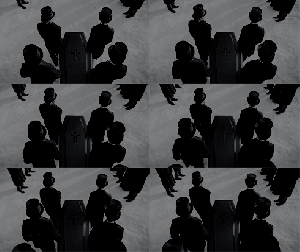
Screams tore through the air as the men and boys burst from
the muck and rubble, only to turn around to tear away at the debris. The snow
was churned into a blood-red mud as they unearthed the bodies of those
unfortunately caught underground. At first they found survivors, pulled from
the ground like a biblical resurrection, but as the day went on and the snow
began to fall again, all they found were the dead. Most of them were young;
just boys not much older than was Thomas, and each retrieved body was gently
laid out on the fresh snow. Beneath them, the mud leeched through the drifts,
staining the icy flakes in feathery streaks.
Thomas and Lucille dashed to the window when the tremendous
rumble first tore through the ground, making the whole house shake and its
occupants cry out in fear. It felt as if an earthquake had rippled across the
entire mountain, and then the screams of pain and terror began as the survivors
clawed and crawled free of the collapse. Their tutor had rushed to the window
to view the carnage himself, and had vanished down the stairs with the demand
that they remain upstairs in their refuge and stay away from the site.
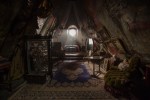
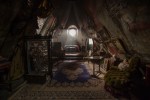
Thomas had watched in horror and fascination from his
vantage point in the attic as the clouds thinned at sunset and threw the
macabre scene into stark relief: each crushed little body set out and sprouting
wings. He saw that, and he saw more: how each of them seemed to burn, vivid red
smoke curling up from the bodies. These confused souls seemed to twist in the
air, and some—some stared up toward the house, toward his window, toward
him…! It could not have been real; just some horrible trick of his mind; a
macabre imagining–Thomas tore his eyes away from the window to turn toward
Lucille, to confirm she saw the same gristly sight.
Lucille didn’t seem to see the horrific visions; she put on
her cloak, gathered some things and announced she was going to help. “I can
assist with the injured,” she declared importantly.
Thomas was terrified. “Don’t go!” he exclaimed. “We aren’t
wanted. Besides, I need you here. Let the others care for them.”
“Stay then,” Lucille sniffed, “if you don’t wish to get your
hands dirty. I doubt Father will care for them either way, but I’m going to
help do as I can.” And then she left. Thomas watched helplessly as she appeared
far down below, walking across the snow and kneeling next to one of the
exhausted foremen. She wiped the crimson muck—whether it was blood or mud was
uncertain—from the broken man and fished through her collection of jars for something
to rub on his wounds. Thomas focused all his attention on her, ignoring the
mangled pile of bodies and imagined spirits.
Thomas watched as it grew dark, even after they lit lanterns
and built fires, until he couldn’t stand it anymore. Food and routine had been
forgotten, not that Thomas could stomach the idea of eating. It was completely
dark when Lucille finally crept back into their room. They quickly prepared for
bed and pulled the covers up. Lucille was quieter than usual, no childish
banter or humming between them. Even after she had snuffed the candle, they lay
on their beds in the dark, subdued and lonely.
“Lucille,” he whimpered. “Are you asleep? I can’t sleep. I’m
scared. The boys from the mine…”
Lucille slid out from under her covers and padded barefoot
across the floor to his bed. Her hair was plaited into a single thick braid
behind her, her nightgown buttoned high at her neck and wrists. She sat next
him, pulling her feet up under her to keep warm. “Those boys can’t harm you,
Thomas. They’re dead,” she said matter-of-factly. She was only two years older
than he, but she was very pragmatic. “Father should have closed the mines
before the snow fell. “
“Why didn’t he?” Thomas asked.
Lucille fell silent, not willing to answer her brother.
Their father was a rare presence in their lives, fortunately, but when he was
home he terrorized everyone within it. The onset of winter was always the
worst: it was almost as if he was compelled to migrate to his ancestral home,
and detested being there. His vicious feuding with their mother and disdain for
his offspring would fill the rooms like a miasma, making the gloomy frigid
months all the more cold and miserable. “Who can say why Father does anything?”
Lucille answered with some bitterness. “I doubt even he knows. But you needn’t
be scared of him or those unfortunate lads now. Go to sleep.”
“I can’t, Lucille; I can still see them on the snow. They’re
lying out there, looking at us.”
Lucille made an exasperated noise. “They aren’t, Thomas. They’ve
taken the bodies away, and it doesn’t matter; they’re dead. Maybe they have
become angels.”
“Do angels have red wings?” Thomas countered. “Do they float
in the air like smoke?”
“So you say you can see them, as what, Thomas? Ghosts?
Spirits?”
Thomas frowned at his sister’s mockery. “I know what I saw,
Lucille, even if you don’t believe me.”
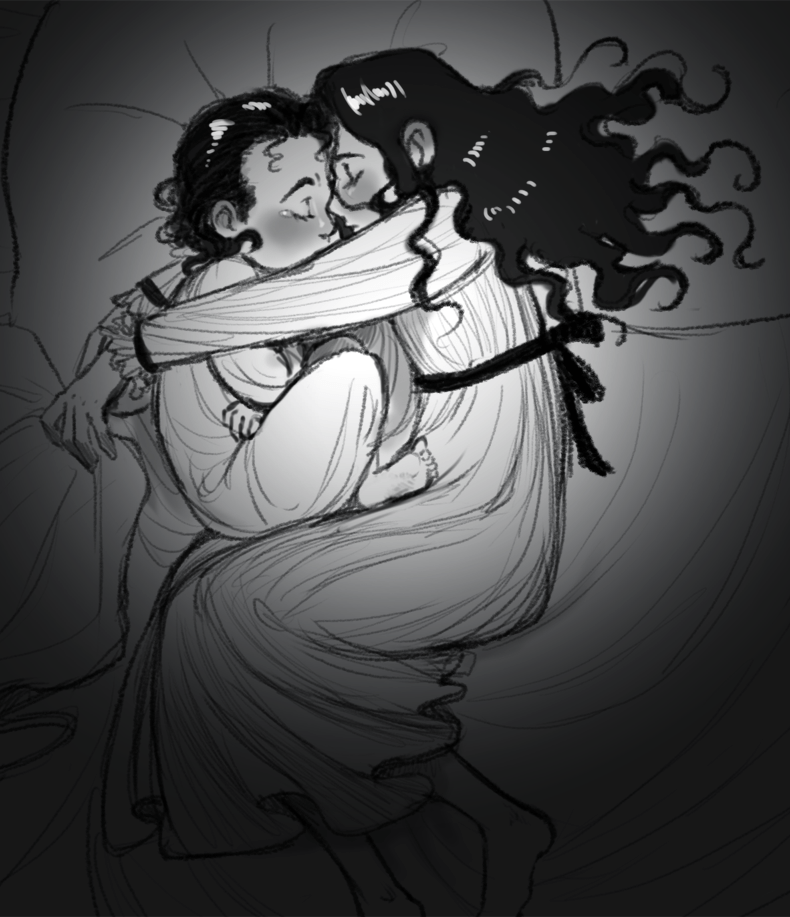
“Oh, Thomas, come here,” Lucille urged him, softening her
tone. She drew him, blankets and all, into her arms. “It doesn’t matter what I
believe. We can make up any story we like, with our magic and imaginations, can’t
we? Perhaps the souls of those boys have grown moths’ wings and will fly up
here to play with us. They won’t have to work in the dark mines underground
anymore; they’ll be our friends. Wouldn’t that be better?”
Thomas settled against her shoulder and nodded. He much
preferred it when Lucille made up stories or sang for him instead of argued and
was bossy. That was when they were the happiest. Thomas was only eight years
old and Lucille wasn’t yet eleven, but he had accepted that his sister was
mature beyond her years and trusted her implicitly. Even knowing the truth, he
would rather believe Lucille’s stories. It was far more comfortable to live
above all of the ugliness, safe and secure in their own illusions of a secluded
existence with only each other for solace, than to consider the reality beyond
the nursery confines.



















 Slutty Yorick