
Tag: crimson peak
FIC: Crimson Peak Revisited
Always looking to the past ~ A journey into the lives of Sir Thomas and Lady Lucille Sharpe.
[MATURE AUDIENCE ONLY: Trigger warnings apply]
Feedback is always welcome.
Chapter 7 below:
CRIMSON PEAK REVISITED
Chapter 7
Constable Webber had never seen a more horrific sight in his
entire career; it was almost like something out of those Penny Dreadfuls. The
bath water was a pool of deep red, the half-sunken body like a shipwreck
marooned on the edge of it. The smell was metallic and rotten; repulsive. Most
of the gore was contained, fortunately, and allowed a certain distance from the
scene as he moved away from the far side of the room. Leaving Inspector Root and his assistant to
their observations and sketches of the scene, Webber made his way down the
stairs and across the foyer to the kitchen.
Seeing that their mistress had returned in their absence,
the butler and cook had crept into the silent house with some trepidation, fearing
a severe scolding for their negligence, only to discover the gristly sight of
their mistress dead in the bath. They had run shrieking in terror from the
house and encountered the startled Finlay returning up the lane with a brace of
birds. Finlay had sped off to fetch the constable post-haste, leaving the
butler and cook out on the drive in hysterics and refusing to darken the
doorstep.
Collecting the inspector and his assistant together with
some of his other officers, Constable Webber and the rest had ridden out to the
remote estate, and had quickly assessed the crime scene. Inspector Foot was
thorough in his observations, dictating his findings to his assistant, who
added additional sketches to a notebook while the constable took his report from
the servants.
The elderly butler looked even more worn and withered; the
cook trembling and shaking with fright. Across the kitchen table from them sat
the groundskeeper, a simple fellow who had once worked in Sir James’ mines,
slumped in sadness and shaking his head. It was this miserable group of
servants who had discovered the body earlier that morning, and had dashed off
to fetch him. There was no question that they were innocent in the affair: they
were a pitiful, worn-out lot, in a house that was slowly falling to disrepair. It
must have simply been a moment’s opportunity, the policeman thought; there
didn’t appear to be much worth stealing in the whole place, and the
disappointment was likely the reason for the vicious murder of the lady. The
house had been searched from top to bottom in case the assailant was still
present, but the hunt was fortunately fruitless; not another living soul was
found in the whole ramshackle manor.
The cook had nearly fainted when she discovered the cleaver
missing from the butcher block; she looked as if she wished to fly out the door
and never return to that awful place. No more could be got from her once she
noticed the missing implement; she merely crumpled against the wall and wept in
shaking hysterics. The butler blearily reiterated that nothing else was
missing; there wasn’t any silver left in the whole place, nor did the lady have
any significant jewelry or cash in the house, but he supposed it was possible,
however unlikely, that she had brought something back from London.
Finlay started suddenly, wide-eyed. “What of the young
‘uns?” he asked, worried. “Where are Master Thomas and Miss Lucille? Clear
forgot ‘em in the rush! And no-one in the attic, you say?”
“Who are they, then?” Webber queried.
“The children, Lady Sharpe’s son and daughter,” The butler
clarified. “The nursery is in the attic. Dear lord, what has happened to them?”
“There are children in residence?” the policeman exclaimed,
taken aback.
“Not infants, but yes,” replied the butler. “Master Thomas is
a lad of some twelve years, and Miss Lucille is a young lady of fourteen.”
Alarmed, the constable considered this new information.
There was no evidence of the siblings in the house, no clue as to their fate,
and while it was good that their bodies hadn’t been found in the house nor was
there any sign of violence against them, he had to consider that the two had
been either kidnapped or forcibly removed from the grounds. Had they been in
the house during the robbery? Had they witnessed the murder? Perhaps they had
been taken away to be silenced elsewhere. “Are you certain they were not here
when you arrived?” he asked sharply. “Is there anywhere they might have
hidden?”
“They rarely leave their rooms, sir,” Finlay answered. “But
if they did, I didn’t see them anywhere near the lane or on the lands. Please,
sir, might we go search for them? I’d not be easy if anything’s happened to
them.”
The constable nodded. “I’ll gather my men and we’ll go now;
those children must be found immediately.” He turned and began calling his
officers to him, informing them of this new crisis. Leaving Inspector Root to arrange the removal
of Lady Beatrice’s remains to the surgeon, Dr. Jones, he hurried to direct his
officers to comb the countryside on foot and horseback, searching along the
roads and fields for the two children.
Directing some of them to head west and south toward
Whitehaven and others north toward Carlisie, he turned toward the east roads
toward Farlam and Penrith. It was already midday, and threatening to rain. It
was doubtful the children could have reached even the closest town by foot on
their own, but he would not rest until every possibility was exhausted. They
were to regroup in Farlam at nightfall if there was no discovery, but Constable
Webber prayed it would not come to that.
For hours, the frantic man pressed on even as the rain fell
in a cooling curtain over the ruddy-tinted earth, soaking the thirsty hills
with fresh drops. The road was quickly becoming a slick of red mud as he rode
on, even when the clouds passed and the sun reappeared in the afternoon sky. He
hardly could believe his eyes when he spotted two little figures down the path,
walking hand in hand.
Frightened and shivering from the downpour that had soaked
them, the children were nevertheless a welcome sight to the policeman. They
appeared uninjured, but there was no doubt that they had endured some trauma:
Thomas’ eyes welled up with tears and Lucille pulled him closer when Webber
discovered them. They seemed struck mute by what they had suffered, not
answering any of his questions, but they allowed him to help them up on the
horse to continue to Farlam. The little town was not that far off by that time;
the poor things had likely been walking most of the day over rough ground. It was
only by chance that they had come back to the road and were spotted, for which
Constable Webber was greatly relieved.
He saw to their care when they arrived, making certain that
they were dried, warmed and fed, before
he regrouped with his officers and consulted with Inspector Root. The body had
been removed to Dr. Jones for examination, and Constable Webber wished nothing
more than to complete the day’s tasks and seek some respite from the whole
affair. Those poor children!
**
The funeral was sparsely attended but lavish, as directed by
the deceased’s sister, Lady Florence, and as provided in the few legal
documents from the Sharpe family’s London solicitors. The children still had
their mourning clothing from their father’s passing, fortunately, so there was
no delay in the proceedings.
The murder remained a mystery. Despite being in the house
while the crime was committed, the children insisted they hadn’t seen anything,
but had hidden in the attic until all was quiet below and fled in terror at the
first opportunity. They would not leave each other’s sides throughout the
entire time, insisting on sleeping in the same room; they would not speak to
anyone but each other unless directly addressed. Interviews with the former
staff of Allerdale Hall confirmed that the children’s temperaments had been
questionable before and all the more so since the deaths of their parents. The
boy had long been a sickly child, with an excitable nature and avid
imagination, but Lucille had often been seen riding on her pony in the hills
and was a sullen, sour girl for all her previous dutiful manner. Lucille had
appeared the more stoic of them, tending to her brother with soft tenderness
that aroused pity for the orphans from all that saw them.
No arrangement had been made for Lucille prior to Lady
Beatrice’s demise, but Lady Florence recalled her sister expressed some thought
to sending Lucille away to finishing school or even a convent but that there
had only been funds available for Thomas. Florence herself had only reluctantly
agreed to oversee Thomas’ long-overdue education in Whitehaven, and flatly
refused to accommodate Lucille: there weren’t any appropriate outlets for the
schooling of a young lady in Whitehaven; as a retiring spinster Lady Florence
did not maintain as much society as she had in her youth. Lucille greeted this news with a furious storm
of obscenity and curses. Her lack of tears or any sign of grief caused some
concern for the police, but her sudden outrage at being told her brother would
be leaving for school in Whitehaven without her alarmed them greatly.
“The poor young lady is insane with grief,” was the
professional opinion, and the suspicion of how innocent the girl was in her
mother’s death arose, only to be quickly dismissed. The possibility was simply
too horrifying to contemplate. What possible motive could Lucille have, even if
she was strong enough to commit so evil an act? Still, the girl’s mind had
become completely unhinged, and she was forced from her brother’s side.
Arrangements were made for Lucille to be committed to the
Cumberland and Westmorland Joint Lunatic Asylum, or Garlands Hospital as it was
more politely called, as a private patient. It was the best Florence could do
under the circumstances: she had been much affected by her sister’s marriage
nearly two decades earlier, and had remained a spinster bitter over her
feelings of Beatrice’s betrayal and loathing of Sir James. Having been cut off
from the Sharpes, she had never formed an attachment to her niece and nephew
and had no experience at all with the raising of children. Her fortunes, too,
had been so diminished as to be impoverished, and the woman was a near recluse,
living an almost monastic existence. Being charged with the burden of the
orphans’ care was not one she welcomed willingly.
“The girl obviously takes after her mad father,” Lady Florence
observed. “It is best that she is kept away from Thomas and receive proper
treatment from those more qualified than I. My nephew needs to apply his
attentions to his studies; he has been delayed too much already, and cannot be
distracted by concern for his sister.”
All of this was quite sensible and even charitable of the
middle-aged lady, and acceptable to both the law officers and the medical
experts involved. Documents were drawn up and all the arrangements made for
Miss Lucille Sharpe to become a private patient of Garlands Hospital in
Carlisle, including a stipend to be provided for her continued care, as long as
would be deemed necessary. Thomas was collected and taken to Whitehaven.
Neither of the children was consulted, of course; nor was Thomas informed of
Lucille’s arrangements. It would be better for him to assume she was sent
elsewhere for her continued education and health than to know the truth. They
hadn’t even been allowed to wish each other farewell before they were sent
their separate ways.
Allerdale Hall was closed, shuttered and locked up, until
the heir would return to claim his inheritance. The sole remaining servant,
Finlay, remained to look after the place and its grounds, but it would remain
deserted for over seven years. In time, the mystery of Lady Beatrice Sharpe’s
murder faded from memory as completely as pebbles sinking in the crimson mud of
the abandoned mines.
FIC: Crimson Peak Revisited
Always looking to the past ~ A journey into the lives of Sir Thomas and Lady Lucille Sharpe.
[MATURE AUDIENCE ONLY: Trigger warnings apply]
Feedback is always welcome.
Chapter 6 below:
CRIMSON PEAK REVISITED
Chapter 6
Thomas and Lucille watched in fascination as the pebbles
vanished into the mucky depths of the ravenous mud, the crimson red clay
swirling in the depths of the pit, enveloping the stones they had dropped into
it from above. It was almost like a living thing in its hunger, trapped beneath
the earth but ever-awaiting an offering. With a shudder, Thomas moved back from
the edge and turned away; Lucille took his hand as they walked back toward the
house.
Mother was away yet again, and the siblings welcomed her
absence even though the heat was oppressive. Left to their own devices and
longing to escape the drunken insults hurled at them by the butler and cook,
the children had taken to the outdoors. Lucille had found several new specimens
for her collection of insects: beetles, butterflies and crickets, all carefully
tucked into her jars. They had watched a spider spin its web and ensnare flies
and gnats, and had a long conversation on nature, with Lucille expertly quoting
her current study of Jean-Henri Fabre’s volumes on entomology. In truth they
could hardly be called children now; Thomas was passed his twelfth birthday and
just beginning to gain his height, while at fourteen Lucille was already
dressed as a young lady, enjoying the solidity of her corset stays supporting
her straight back and emerging slender figure.
She had noted with some satisfaction that she was developing breasts,
and her form was more curvaceous than Mother’s; they reminded her of
half-remembered visions of her beloved Theresa. She would often stand naked in
front of the nanny’s old mirror touching and exploring the newness of her
changing body with the same clinical detachment she had for her specimens.
As expected, the butler and cook had abandoned their posts
as soon as their minimal requirements were fulfilled, no doubt off to drink
into a stupor; as for Finlay, he was likely asleep under a tree somewhere. The
baking had been done in the relative cool of the morning, at least; it was no
great effort to dine on a bit of cheese and bread for repast. Although the
day’s activities had been leisurely and pleasant, Lucille felt tired and
cramped and they were both flushed and dirty from their hike, so after a simple
cold meal, they retreated to the attic to wash off as the sun set and the air
began to cool.
“It’s too hot for a long soak,” Thomas complained. They both
enjoyed lingering in the washtub with heated water, but it took so long to fill
from the tap and heat the many pails on the coal stove. He supposed that there
was a certain appeal to just sitting in cooler water in the basin, but he
debated whether he could be bothered to fill it rather than just strip and
sponge off.
“You’ll enjoy the soak better,” Lucille pointed out. “Come
on, then; I’ll help you fill the tub. You wash up first, and then I’ll do.” Ignoring
her aching back, Lucille took up the pail as Thomas set out the metal tub.
Gallantly Thomas insisted on taking each pail to the tub for
her, and Lucille watched with admiration as Thomas poured in the water again
and again. He had grown quite tall, not yet as tall as she and certainly not as
tall as Father had been, but he was showing the signs of becoming an imposing
height in the years to come. Fortunately he was far more graceful than either
of their parents, and had a promise of great charm and attraction evident in
his manner. Watching his movements made something flutter inside Lucille; she
could barely contain her love for her brother when she saw him like this.
Thomas noticed her observation and smiled, setting down the
pail and closing the tap. “Go and change
your clothes; I won’t be long or dirty the water too greatly,” he advised her,
kissing her cheek affectionately.
She nodded, turning away and unpinning her long braids. She
couldn’t resist glancing back as Thomas shucked off his garments and sank into
the tub with a happy sigh. The tinkling sound of water droplets as he washed
away the dust and sweat was like music to her as she walked away, unfastening
all the many buttons, laces and hooks of her own clothes.
She removed the outer dress easily enough, shaking it out
and draping it over a chair, and inhaled deeply as she loosened the tight,
rigid stays from her ribcage and slim waist. Letting her petticoats drop in a
cloud of starched linen, she stepped out in her chemise, tugging the sticky
fabric from her damp skin. She wrinkled her nose, disliking the scent of
perspiration and…something else—Lucille looked down and gave a startled cry at
the brownish-red streaks on her clothes and fingertips. Blood!
Had she been injured? How was it that she was bleeding?
Frantic, she tore off her clothes and ran her hands over her skin. There was no
puncture or wound to be found, but there were smears of fresh blood on her
thighs.
“Lucille?” Thomas stood in front of her wrapped in a rough
bit of toweling, still wet and with a concerned look on his solemn little face.
“I heard you cry out.”
Oblivious to her nudity, she held up her hand to him. “I’m
bleeding,” she stated, voice quivering.
Thomas stared at the stains with sudden fright. “Are you
injured? What happened?”
“I don’t know. I don’t feel any harm, I’m not in pain, but
there’s blood, fresh blood…” A sickening feeling washed over her as she
considered whether she had poisoned herself inadvertently. It would explain her
cramps and backache, but it didn’t seem the same as what she had observed in
their parents. Perhaps she was just ill?
“Are you certain you haven’t cut yourself? Maybe a scratch?”
Thomas asked desperately.
She shook her head. “I would have felt it, surely.” It
wasn’t a large amount of blood, but it was more than a mere scratch, and still
flowing; she felt the slow trickle of it on her leg. With a deliberate
disregard belying what she truly felt, she traced the red trail with her
finger. A sudden lightheadedness made her shiver.
Thomas took her by the arms, steering her toward the sofa.
He grabbed another of the towels, urging her to wipe away the blood and staunch
the flow. He pulled the blankets from their beds, wrapping her in one and
himself in another, and set her down. “Wait here,” he told her. “I’m getting
some brandy. It will steady you.”
Lucille started to protest, then realized that Thomas was
probably correct, and there was no-one in the house to stop them, anyway.
Thomas returned bearing the bottle triumphantly, offering it to her. She screwed
up her face at the smell of the stuff, but took a mouthful right from the
bottle. Coughing and gasping, she handed it back to him. Thomas took some
himself, sitting beside her.
“Oh, that stuff is horrid!” Lucille exclaimed, even as
tingling warmth rushed through her and her cheeks flushed a rosy pink. There
was a similar effect on Thomas, but he boldly took another sip before setting
the bottle down on the floor. He lifted
one corner of his quilt and pulled her closer in a hug, holding her silently for
some time. She cuddled him, the warm solidity of him a comfort.
“Lucille?” Thomas asked quietly in the shadows of the room.
“You aren’t going to die, are you? You wouldn’t do that; you wouldn’t leave me
here alone, would you?”
“No, Thomas,” she reassured him. “It’s not that bad.
Besides, I’ll never leave you, not ever, just as you would never leave me.”
“I never will,” Thomas promised with childish passion. “I
love you, Lucille. I love you more than anything or anyone else in the entire
world.” His gentle fingers traced over the scars on her back, deep crescents
between her shoulder blades that had come from one of the beatings Lucille had
endured in his place; they reminded him of moth wings.
Lucille smiled sadly at him, caressing his cheek with her hand.
“And I love you, Thomas. You are filled with nothing but innocence and
perfection and love, darling brother. All we have is our love; nobody can take
that from us, not ever.” Perhaps it was
the effects of the brandy or whatever was happening to her, but Lucille was
suddenly drowsy, lulled by the soft comfort of their embrace and proclamations.
“It must be dreadful to not have love,” Thomas commented,
owlish and a bit tipsy. “It would be worse than death, I think, never to know
love. Do you think our parents ever have known love?”
“I doubt it,” Lucille replied. “They certainly haven’t any
for us, nor, I believe, did they ever have love for each other.”
“Do you not pity them their lack? It must be so terribly
morbid.”
“Father cannot feel anything at all now,” Lucille pointed
out sleepily. “Nor can he do anything else to harm us. No, we have all the love
we need from each other, brother; we will share it together, forever, just the
two of us.” Gently she kissed his eyelids and held him tighter. They curled
against each other, naked beneath the covers in the dark, and surrendered to a calm,
quiet, dreamless slumber.
**
There was a moment when she arrived that Lady Beatrice
Sharpe thought the house had come alive like some demonic beast and swallowed
the few remaining occupants. Her uneven, hobbling footsteps echoed through the
grand entry and her calls for the servants and even the children went
unanswered as she wandered from room to room. There was bread not more than a
day old on the kitchen table, however, and the cooking fires weren’t cold
enough to have been left for long. None of the few remaining silver spoons were
missing, and they were untarnished, laid in the drawer neatly. With great
effort, Beatrice made her way up the creaking wooden stairs, placing her cane
on each step and gripping the carved bannisters, rather than take that
confining contraption of a lift Sir James had insisted on installing for her.
She disliked the thing on principle, and found it too loud. The house was never
quiet, not completely, but it was quickly apparent that the butler, the cook
and that odd fellow, Finlay, were nowhere to be found. Quite cross at this
lapse in service and weary from her long journey back, she made her way up to
the attic.
At first she questioned what she was seeing: the
water-filled tub, surrounded with discarded clothing, and the bundled forms of
her children, huddled beneath the blankets on the sofa, locked in a naked
embrace, the decanter of brandy squatting by the sofa leg. The two of them were
sunk in an intoxicated stupor, disheveled and smiling beatifically in their
illicit repose in the afternoon light. Lady Beatrice staggered forward, and her
boot caught on Lucille’s discarded shift. She kicked at it; the smears of dried
blood on the folds of cloth lay spread out in front of her.
Enraged, Lady Beatrice gave a furious bellow and lurched
toward the pair, tearing off the covers and swinging her cane. Thomas tumbled
to the floor, screaming as the blows struck bare flesh; he clawed at the blankets
and curled into a ball trying to shield himself from the onslaught. Lucille
threw herself over the writhing mass, disregarding the blows raining over her
own body, shrieking at the punishing figure of their mother. “Don’t hurt him!
Mother, please, stop! Stop; don’t hurt him!”
Beatrice spied the blood-stained towel as it fell from
Lucille’s legs, saw the streaks on the girl’s thighs, and renewed her
onslaught, hurling condemnations and curses at them both but mostly directed at
her son. “Rutting animal! Sinful, wicked creature! You evil, incestuous
bastard, you’ve assaulted your sister! She’s ruined, ruined, you lustful brute!
You rabid dog! I’ll beat you to death for this!”
“Mother, STOP!!” Lucille rose up and grappled with the vengeful
woman, tearing the cane from her hands. Sobbing, Thomas crawled away, clutching
the covers over himself. “Thomas has done nothing to me! He is innocent, I
swear! I swear it!”
Beatrice’s eyes were wild and accusing as she glared at
her naked daughter. “How dare you interfere!” she raged. “Do you imply that you
invited this upon yourself, girl? Shameless slut! Bloody little bitch! You
would do such repulsive things beneath my own roof and claim to be innocent?
Oh, you will suffer for this, the both of you! Give me back my cane; I’ll beat
the wickedness out of you!”
Lucille pushed her away, going over to her miserable,
blubbering brother, trying to calm and sooth him. Her head was pounding like it
would burst, and every part of her ached. She sensed that there was fresh blood
on her legs again, but she didn’t care. She barely had time to veer back as
Beatrice slapped her, raking her hand and the large ring on her finger down her
daughter’s face from her forehead and catching her upper lip in its descent.
Lucille cried out, clapping her hands to her face in pain, momentarily blinded.
Beatrice shoved her through the doorway, slammed the door shut, and locked the
wailing Thomas within the nursery bedroom.
Somehow Beatrice had retrieved her cane. With an
unsuspected strength, she grabbed Lucille’s arm and pushed a hastily snatched
nightgown at her. “Cover yourself up,” her mother ordered as she marched her to
the elevator and called the contraption to them. Shoving the girl inside it,
they rode to the middle floor, going to Beatrice’s bedchamber in a tense
silence. Beatrice sank onto the high backed settee, setting her daughter in
front of her. “I don’t know where those miserable servants have gone, but at
least we are spared the shame of this without witnesses,” she spat angrily.
“There was no shame, Mother,” Lucille protested.
“You can stand in your own filth and nakedness before me
and say that?” Lady Beatrice retorted. “I am not blind, child!”
“Thomas didn’t do this to me! How could you think that,
Mother; he would never hurt me, nor I him. I-I just found the blood, I wasn’t
even in pain…he wasn’t even near me; he was bathing…”
Lady Beatrice groaned. “You were discovered unclothed,
asleep in an embrace, girl. Do you think I’m a fool? This wickedness has gone
on long enough; the two of you should have been separated long ago and would
have been, had it not been for your father ruining us.” She stared at her
daughter with an undisguised revulsion, as if Lucille was to blame for it,
also. “I have spent this time away in securing Thomas’ placement in school, as
would be proper. Almost too late, apparently! He is to attend a place in
Whitehaven and board with my sister, Florence. As for you…I had intended to
make a lady of you, but I think perhaps you should be sent to a convent,
instead. I don’t want you here or anywhere in my presence; you sicken me.”
Lucille’s knees buckled at this news, and she pleaded
with her mother. “Oh, no, please, you can’t part us; not from my beloved
brother! We’ll die without each other, we need each other!” she burst out. “I’m
sorry, Mother, I am so sorry; I know I am ugly and wicked, but please, please
let us stay! Or, send me to Whitehaven, also; I can be good! I can learn to be
a lady—Mother, please, I’m begging you!”
“Get up, girl, and cease this pathetic emotional display
at once!” Lady Beatrice demanded. “My decision is final, and the matter already
settled. I’ll overlook this outburst as a symptom of your new hysteria, but if
you are to be a proper lady, you must keep your emotions in check. You’re not
going to die; that blood is merely the start of your monthly courses. You’re a
woman now, and will have to endure this each month, or else submit to a husband
and suffer childbirth.” Lady Beatrice took up her cane, but only to assist in
rising from her seat. “Now, it has been a long and tiresome journey, and I wish
to bathe and rest. Help me and then go to get cleaned up…in the kitchen, mind you!
I don’t want you anywhere near your brother. Let him stay locked up there for
now; I’ll show you what is necessary for your condition and you will attend me
for the rest of the day.”
Wearing only her nightgown with a sanitary pad pinned to
her underclothes, Lucille steadied herself and tried to ignore the muffled
sounds of her brother’s crying from upstairs as she drew a bath for her mother,
assisting the woman into the steaming water. Much to her dismay, Lucille
discovered that they had slept through the morning into the afternoon; mother
had sent her to the kitchen to prepare food for tea. Her stomach growled,
having missed two meals. Her head felt like it was wrapped in cotton wool; the
deep scratch on her face stung. It hurt to eat, so she merely broke off bits of
bread and nibbled on them as she busied herself in the kitchen.
Bitter hatred bubbled up insider her. She cursed her
meekness, her fawning for her mother’s nonexistent affection. She railed
against Mother’s cruelty; it was intolerable, and she simply couldn’t stand it
anymore. What that horrible woman had suspected them of–! What did she know of
love, anyway? Thomas’ words came back to her, and she agreed: better dead than
not to love.
Unblinking, Lucille wrenched the bone cleaver from the
butcher block and walked up the staircase to the master bathroom.
Mother sat up in the bath in alarm as Lucille strode in.
“What on Earth are you doing?” she exclaimed.
“I won’t let you do this,” Lucille said calmly. “We love
each other, Thomas and I. You cannot separate us.”
“I most certainly can, and I will! And what do you mean,
you love each other?” the lady asked suspiciously.
“You won’t. We are inseparable. I love him, and he loves
me. You’ve never loved anything or anyone in your entire life, not Father, not
even your own children. You are as stupid and cruel as an old sow farrowing her
piglets, but I won’t let you hurt him or me ever again.” Lucille advanced
forward, gripping the cleaver without hesitation and raising it over her head.
“Monsters! The both of you are monsters!” Lady Beatrice screamed,
her eyes wide in horror. Lucille swung the blade down and buried it deep into
her skull, nearly splitting it in two as blood and gore exploded from the gash,
and then pried it loose, stepping back. The screams drowned in a gurgle of
blood-choking moans, and the body twitched and jerked, splashing the water
around in a crimson tempest. Lucille sat nearby and watched as her mother sank
back, eyelids half-closed over her glazed eyes, blood cascading like waterfalls
into the darkening bath water until she stopped moving.
Lucille felt nothing as she stared at her mother’s
murdered body, except maybe a ribbon of relief. It had been no more difficult
than killing a pig, actually. Taking the cleaver to the sink, she rinsed it and
her hands off, pleased to see that she had not soiled her gown. Moving like an
automaton, Lucille left the room, taking up mother’s keys from the vanity. She
descended the stairs through the kitchen to the basement, pried up one of the
flagstones, dropped the bone knife on the muddy soil beneath it, and laid the
tile back down. Using the elevator to ascend to the attic, she unlocked the
door for her brother.
“Lucille, your face!” he exclaimed as he saw the ugly
scratches left by Mother’s ring.
She shrugged. “It’s nothing; it hardly hurts. It doesn’t
matter, anyway. Mother is dead,” Lucille
declared, helping him into a nightshirt. “Come see.”
Hardly believing it to be true, Thomas allowed himself to
be led to the bathroom. He nearly fainted at the sight of the slaughter within.
“Do you think she had a soul, Thomas?” Lucille asked
serenely. “I wonder. Let’s watch; tell me if you see it. Maybe the moths will
come and fly it away.”
Thomas stared at Lucille, horrified. He didn’t see
anything like what he had after the collapse of the mines; no crimson smoke
rising from the corpse, no haunted pleading; it was still and empty like a
slaughterhouse carcass. “There’s nothing, Lucille.”
“I find that not at all surprising,” Lucille remarked. “Shall
we hold a vigil?”
The two siblings sat in silence until it grew dark and
they couldn’t see anything in the humid, dank room. Finally Lucille stood, stretching, and left
the room hand in hand with her brother. He followed her lead up to the attic, watching
without comment as she lit the lamp. “It will be all right,” she promised him.
Thomas shivered. “I don’t want to stay here, not
with…that. And what will happen when Finlay and the others come back? What will
we tell them?”
Lucille stared at him, considering. “Yes, I agree,” she
replied at last. “We need to leave. Get your shoes and coat; I’ll pack us some
food and things. We’ll walk to the depot and go to London. If anyone comes here
and finds us, we’ll say robbers broke in and we hid up here, and ran for our
lives as soon as we could. Surely they’d believe that.”
Thomas nodded in agreement; it was a good story. No-one
would doubt that he at least was scared; nothing else could have convinced him
to flee into the darkness of Crimson Peak. Lucille donned her own coat,
wrapping a scarf on for good measure, and pulled on dark stockings and boots.
She shoved a few loaves of bread and other bits of food into a sack, and they
were off hand in hand, rushing forth from Allerdale Hall toward the dirt road
to the train depot near Farlam, eighteen miles away.
FIC: Crimson Peak Revisited
Always looking to the past ~ A journey into the lives of Sir Thomas and Lady Lucille Sharpe.
[MATURE AUDIENCE ONLY: Trigger warnings apply]
Feedback is always welcome.
Chapter 5 below:
CRIMSON PEAK REVISITED
Chapter 5
When Sir James returned at dusk with a brace of grouse and
without Thomas Lucille had nearly collapsed in hysterics. Their father’s
protestations that the boy had fallen behind and, he believed, had merely fled
back to the house, rang false and dubious to her. A search party was gathered
as quickly as possible, but it was already dark by the time the men set out.
Frantic over her brother’s fate and annoyed at not being
allowed to help in the search herself, Lucille could not contain her anxiety.
Beatrice kept up a muttering accusation that Sir James had likely killed their
son, and it wouldn’t surprise her at all if he did them all in, including his
own person. He’s gone completely mad, she asserted; the brute was determined to
destroy them all. Lucille finally fled her presence, unwilling to tolerate this
litany; she paced along the walkway in front of Allerdale Hall, unable to see
beyond the torches’ light pooling to the surrounding stone wall.
A soft, chilling rain fell before dawn, but she would not
shelter inside any farther than the doorway, hoping to catch sight of a lantern’s
light through the mist. She remained at her post as the rain stopped, the
clouds dissolved and the sun rose in a harsh, burning arc in the sky. She
ignored any attempts to return to her mother’s side, even when threatened with
caning; it meant nothing to her—the pain of not knowing whether Thomas lived or
not, if he was injured was far greater than any physical pain she could suffer.
At last she spied the distant star of a lantern and bobbing figures of the
search party hurrying toward the manor; one of them was carrying a limp bundle
wrapped in a dark overcoat.
“Fetch water and something dry!” Sir James shouted as they
approached. With a barely concealed gasp of relief, Lucille ran before them to
fulfill the request. “Set him down before the fire, Finlay; in there!”
Lucille could only stare as the man gently set Thomas down
on the sofa in the great hall before staggering aside and falling to his knees.
A glass was poured and shoved into his shaking hands, but Lucille’s attention
was on the unconscious form of her little brother as he was unwrapped and his sodden
clothes stripped off. His bare feet were
blistered and bleeding from dozens of scratches and cuts; his pale body smeared
with mud and speckled with angry, red insect bites. His long, dark hair fell
back from his flushed face, and Lucille caught sight of a mottled ring of
bruises around his slender neck. Her eyes narrowed; could it be that their
mother had sensed the truth?
Setting that thought aside for the moment, Lucille set about
with tending to Thomas’ immediate needs. He was hot and flushed, and his breath
was shallow and rasping; they placed a wet cloth to his lips and washed away
the muck of the marshes from him. It was only with much coaxing that Thomas
opened his eyes to mere slits and managed to drink a few sips before slipping
back into a fevered delirium.
Nothing could persuade Lucille to leave his side, even after
Thomas was wrapped in clean, dry bedclothes and settled onto his bed. Carefully
spooning water, tea and broth into his parched lips during his few moments of
consciousness, Lucille also plied him with her own medicinal concoctions until
his fever broke.
“A-am I still living?” Thomas asked, coherent after a week
of illness. “He said I was dead.” His
voice was a low, raspy whisper, but his eyes were at last open and clear of
fever. Lucille gently brushed his cheek, no longer burning hot, with an
undisguised tenderness.
“You are still alive, my darling brother. You’ve been quite
ill, but you are on the mend now. You just need rest. I’ll make you an egg, but
would you take something to drink first?” She helped him sit up, watching as he
swallowed painfully. Setting down the cup, she suddenly embraced him and burst
out, “You must get better, Thomas; you must! I couldn’t bear it if I were ever
to lose you!”
Thomas rested his aching head against her shaking shoulder.
“Thanks to you, I will,” he reassured her. “What happened? How long have I been
ill?”
Lucille frowned, pulling back. “Do you not recall?”
Thomas shook his head with some difficulty. “No, not
entirely.”
Lucille’s frown deepened. Thomas had muttered and cried
during his slumber, revealing to her the truth of their father’s murderous
intent, although the evidence on his own skin was enough proof for her. Perhaps
it was merciful that Thomas didn’t remember the traumatic incident in detail.
“It has been nearly a week since you were found in the marshes; you were
dreadfully ill.” She steadied herself despite her exhaustion and high emotions,
releasing him and getting to her feet. “But you are improving at last. Sip that
if you’re able and sleep.”
Thomas reached out and took hold of her hand. “You should
rest, too, Lucille. No doubt you haven’t since I was returned.”
“Soon,” she promised, patting his hand. “I’ll rest as soon as I am able.”
**
Rest did not come as soon
as Lucille needed, for all her promises. She reported on Thomas’ recovery to
her parents, but instead of being praised and given some much-needed respite,
she was scolded for neglecting her attention to her mother, and was immediately
pressed into her task of rubbing liniment on Beatrice’s scarred leg. She was
informed that Mother would once again be traveling to London, with a dawn
departure, and would require more emollients—she must prepare them for her that
night. There was no talk of Lucille accompanying her, of course; that had never
been a consideration; rather, the expectation was that she would remain to wait
upon Sir James and continue her care of Thomas during his recovery.
Mother was completely
silent during Lucille’s thorough message, not even looking at her, the unspoken
acknowledgment of their master’s violence hanging heavy between them. Lucille
was certain that Lady Sharpe was aware of Sir James’ brutal attack on the heir
to Allerdale Hall, but it was not discussed. Lucille felt jealous of her mother
even while she pitied the icy woman; a rising disgust of men and their power
and privilege threatened to choke her, and she wished she could speak her mind,
if only to her own mother. Mother could
simply deny the reality, or run away and abandon her home and family, whenever
she wished, but she and Thomas were condemned to live and serve their beast of
a patriarch in the decaying prison of Allerdale Hall even as Sir James
continued his destruction of the place and all within its walls. Longing for some kind word, some feminine
sympathy and compassion, Lucille knew that the only softness between them was
this small easing of pain she provided and so cherished. She had never
experienced love from her mother; the thought that her father in his unbridled
hatred and rejection could have destroyed her brother, her only source of
affection, sickened and outraged her.
If she only she had been
born a man, the true heir of Crimson Peak! It was not a new thought on which
she mused as she mixed new concoctions, but for the first time she contemplated
what she actually would have done. Challenged him to a duel? Exiled him, after
thrashing him for being such a drunken disgrace? Certainly a man of his status couldn’t
be tried by law for his actions, could he? Attempted murder, even against one’s
own, was still murder, no doubt, and she couldn’t see his squandering of their
fortunes as anything more than robbery, really, but there was no-one to stop
him, so far as she knew. Judging from the novels she had read, such doings
weren’t unique to their circumstances. As a woman, even a young and intelligent
woman, she had even less hope of obtaining justice. She supposed that all for
which she could hope was he would answer for his sins after his death, on his
day of reckoning. It couldn’t come soon
enough, in her opinion…
With a sudden epiphany,
Lucille realized she had it within her to act on her hope. And how utterly
ironic that it would be through the most feminine of means: poison! Like to
like; Sir James was the insidious poison in their lives that threatened their
very existence. She had the means to do it, nor was she afraid to do it; in
fact, now that she considered the possibility, the more eager she was to execute
her plan. She would have to be subtle and cunning, gradually introducing the
toxin to him alone, but if she was consistent and unrelenting in her resolve,
she could free them all from the hateful tyrant that was Sir James: never again
would they suffer from his stifling oppression. She could protect and save them
all!
Carefully selecting and
pocketing one of the little glass bottles from the wooden storage case she used
for her medicinal and cosmetic ingredients, Lucille hurried to complete her
mother’s salve and help in preparing Father’s meal as she continued her plans
to see justice done. How much to use? She knew the dosage of arsenic put out
for the rats, and even knew how to extract the poison from the crimson clay
residue, but she decided that she didn’t want to be too hasty. Her father
should suffer; too quick a death would be a mercy…and far too recriminating.
It was easy enough to mix
it into his food and drink before setting it before him at meals, as serving
him at table was her designated chore. She varied the amount and at which meals
she did so, in order no suspicion fall on her, and then waited, telling
no-one—not even Thomas—of her plot, observing to see if there was any effect.
To anyone else, it would
have appeared the many vices Sir James had indulged in were at last catching up
with him; his health began to fail, and Lucille noted each symptom with a
morbid curiosity. Unfortunately while he grew physically weaker and more ill,
his temper and willful nature remained just as dreadful and overbearing. He was
irascible and moody, often lashing out at Lucille and beating her without
provocation. He dismissed the housekeeper on impulse, declaring that the damned
house could fall to dust around them for all he cared; all that remained of the
once-numerous staff were the butler, the cook, and Finlay, who had worked in
the mines before being injured in their collapse and now acted as personal
servant to Sir James and occasional groundskeeper. With Lady Sharpe traveling
often and extending her stays in London, Lucille became the lady of the house,
tending to the care of the few rooms not abandoned and their miserable
occupants. Thomas avoided everyone but his sister; he occupied himself in the
attic most of the time, doing what he could to alleviate his sister’s burden
and comfort her with little trinkets and gifts of his own creation. Time passed
slowly.
After months of inaction
and increasing sickness, Sir James declared he had plans to travel once more.
It was a desperate move, for the family fortunes continued to wan, but Sir
James had never been content to stay at Allerdale Hall for any great length of
time even when Crimson Peak had been prosperous. Lucille was given directions
to prepare a particularly sumptuous dinner for him, in part as a show of hope
for success and in part to stimulate his recent failing appetite.
The cook—a mean-spirited
creature who had been given over to drink by the demands of creating something
fitting for a gentleman’s table out of a beggar’s gleanings and whatever
remained of their garden and livestock—was determined to roast one of the few
pigs left for the baronet. Knowing the woman was likely to botch the job,
Lucille was given the gruesome job of dispatching the squealing beast. The girl
had witnessed slaughter before, of many different animals used in the kitchen,
but she had not been allowed to do the deed. Just processing the carcasses into
various edibles had sickened her, and she loathed the arduous chore of plucking
the feathers from poultry and gamebirds and skinning rabbits. Having witnessed
the wonders of chicks hatching, she could barely stand the idea of eating
them…yet she had been forced to harden her heart against her more sentimental
side; had learned to ignore the sounds of death and pain and the sight of blood
that were part of the process. She was tall and strong for her age, and
dispatching the piglet was no difficulty for her. On the contrary, the
necessity of it and her practical nature made it easy, and she was able to
slaughter it with the heavy cleaver with a dispassionate expedience that belied
her youth. She only hoped the cook wouldn’t ruin her hard work.
Knowing this might be her
last chance for a while; Lucille debated if she should add a significant amount
of her carefully harvested arsenic to the food. The effects were obvious, but
she couldn’t be certain that they would be permanent. There was never any way
to determine how long Sir James would be away; if he were to recover from the toxin’s
effects while he was abroad, surely he would begin to suspect his poisoning—but
if she were to dox his meal too greatly, there would be no question of her
guilt. In the end she decided to add it to each of the dishes she served him,
not enough in any single one to be lethal, but enough to inflict
further—hopefully permanent—damage.
Sir James was in no
condition to travel the next day, coughing and wheezing and complaining how his
aching bones and griping bowels would make his journey abroad a misery.
However, the baronet didn’t for a moment consider delaying his journey or
consulting a physician, of course, and Lucille smiled inwardly as she served
him his favorite breakfast of fried potatoes, eggs, and leftover pork liberally
laced with arsenic. She even added it to the many mugs of ale he consumed in
his increased thirst, enjoying the sight of him staggering to the coach and
slouching in the back, coughing into a dark-stained handkerchief as they sped
away.
It was not unexpected
when they received word that Sir James had not survived his travelling, but had
collapsed and died shortly after his arrival at his destination. Lady Beatrice
immediately made arrangements for his funeral and their proper mourning; it was
to be the first time the children had ever left Crimson Peak. Beatrice refused to have Sir James’ remains
returned and interred in the family crypt, justifying her decision by stating
frankly that the cost was prohibitive and beyond their means, although her
lavish spending on their mourning attire indicated otherwise. Although somber,
the surviving family did not show much grief or weeping at the death; Thomas
was actually excited by the unexpected release, while Lucille maintained a calm
and dignified demeanor, the perfect companion to their widowed mother.
As they had already
curtailed their social involvement before, it was no burden to return to their
isolation after the funeral. They stayed for a time in London, but Beatrice
wished to spend the first months of mourning away from town and it wasn’t long
before they had returned to the far distance of Cumberland. Lucille had hoped
that there would be some relief to their oppression with their father’s demise,
but Mother remained just as bitter and resentful when they returned. The
expense of the funeral and the financial debts Sir James left behind soured her
all the more, and she was loud and profuse in her condemnation of her deceased
husband for leaving them so impoverished. It was indecent how destitute they
had become; how was she to sustain them? They could not afford to even educate
Thomas or supply a dowry for Lucille, and she would require treatments and the
house would need repairs; there simply weren’t enough funds remaining.
Still, Lucille found her
responsibilities lessening somewhat; she and Thomas now had time to take walks
around the desolate landscape of Crimson Peak, exploring the Roman ruins and
old mines together. They each pursued their own studies and hobbies at their
own pace, and often entertained each other with storytelling and dancing in the
attic at night, after their mother retired to her bed and the servants slept.
Lucille was growing into a tall young lady of thirteen, and Thomas was a clever
lad of eleven.
Mother took to her bed
more and more, suffering from increased physical pain and emotional exhaustion.
Lucille discovered that she derived some pleasure from caring for her, both
from the contact and the power she wielded over her patient. To prolong the
periods of convalesce, Lucille would occasionally taint Mother’s tea with a few
spare drops of poison—she only wished to insure extended illness, not kill her
outright.
Despite Lucille’s longing
for a greater connection to her remaining parent, Beatrice’s aloofness
stubbornly persisted. Worse were the occasional outburst of rage that would
come upon her, when she would strike out at her daughter with a hail of curses
and vicious lashings of her cane. Withholding her tears in order to deny her
mother the sight of them, Lucille would seek out Thomas to console her as he
had long done, embracing her in the dark of their secluded refuge.
FIC: Crimson Peak Revisited
Always looking to the past ~ A journey into the lives of Sir Thomas and Lady Lucille Sharpe.
[MATURE AUDIENCE ONLY: Trigger warnings apply]
Feedback is always welcome.
Chapter 4 below:
CRIMSON PEAK REVISITED
Chapter 4
It was soon apparent that the mines and kiln of Crimson Peak
were beyond repair and would be closed permanently. Sir James was unbearable in
his fury, but for all his demands and threats—and some said even bribes—he
could nothing but watch his industrious empire crumble into dust and vanish.
The kiln, the factories, the warehouse, even the cobble stoned driveway were
dismantled and the very bricks sold. There weren’t any more mining employees
because there wasn’t any employment for them. The stable hands and gardeners
were reduced, groundskeepers gone. The
house servants were led go in batches: the maids and footmen, Father’s valet
and Mother’s lady’s maid, even Thomas’ tutor were all dismissed.
Allerdale Hall itself suffered a physical decline after the
mine’s collapse, too. Without maintenance, the land around the estate overgrew
with sharp grass and choked with weeds; carpets of ashy, shriveled leaves fell
under the scrubby, twisted trees that dotted the edge of the grounds. Lucille’s
pony was sold off, as was most of the livestock. Only a single rosebush
remained in the once-lush garden, a splash of huge crimson blooms in the
thorns. There weren’t any more butterflies or jewel-bright beetles; there
weren’t even birds other than a few chickens. The house itself seemed to be
sinking, cracks appearing in the plaster of the walls and mud seeping along the
floorboards. The woodwork grew dull; the dust gathered in corners: an air of
gloom settled in.
It wasn’t a cloistered silent place, however. The house
groaned and creaked, and when the wind blew, it moaned and sighed through the
chimneys like a living thing. The siblings would flit from one shadowy corner
to the next, or huddle together in the attic, whispering to each other under
the shaded eves. Worse were the quarrels between Sir James and Lady Sharpe; too
often the angry words would escalate into furious curses and threats, and
Beatrice’s screams of pain and outrage. No mention was ever made of these
abuses; they were ignored by the few remaining servants and the children alike.
Too often the siblings were called out of their rooms after such incidents to
attend to their parents, as a demonstration of filial duty. Both their parents
made demands on them: the children would entertain them with Lucille’s piano
music and Thomas’ reading and recitations, as if they were the most proper and
loving of families. Thomas even began to look forward to these evenings, for it
was the only time their father showed any kindness toward him; indeed, it was
the only time he could recall a tender pat on the head and compliments from the
man. He was so moved by the unexpected contact that his eyes filled with tears.
Mother, however, wouldn’t even look at
either of them and barely said a word in their presence, let alone a
compliment. She tried to hide the fact that she was in pain; her hair had begun
to whiten, as if struck with frost.
During that time Sir James returned from one of his
still-frequent trips abroad and for a day or two was still somewhat sober and
cheerful. He insisted on his son and heir joining him on a walk with the remark
that the fresh air would do the lad some good. The hounds were happy for the
holiday and dashed down the dirt path, barking enthusiastically. Thomas did his
best to keep up with the long strides of his father, for he had been ill off
and on. He was a wan, thin thing, his skin all the more pale in contrast to his
dark hair, blue eyes wide and eager, excited to have the undivided attention of
his father.
They walked on in silence for a while, until Sir James began
to make some small talk. It was mostly observations of the weather, and
inquiries of his interests, and some rambling incidents of his travels. Thomas
replied that he should very much like to travel someday.
“As well you should, boy,” Sir James approved. “There’s far
more to the world than this blighted corner of it. Fancy being a soldier, then?
There was a Sharpe who bought a commission a generation or so back, but nothing
came of it. Wouldn’t do, though; not for you. You, my boy, are heir to all
this.” Sir James vaguely waved a hand over the whole of Crimson Peak. “It’s a
grand thing, this legacy, you know. An honorable duty.” He frowned and began
walking once more. “It will flourish again, you’ll see. They’ll all see. Still,
you needn’t tie yourself to it like some broody hen; travel, see the world. For
god’s sake, don’t bind yourself to some wretched woman too soon! Above all,
don’t fall into that trap! When our fortunes return, Thomas—and they will, I
swear—the name of Sharpe will hold some weight again, and you’ll be sought
after. Don’t sell yourself short.”
“I shan’t, Papa,” Thomas promised. “Although, I shouldn’t
like to be a solider, I think.”
“No, I suppose not. No, your place is by my side, boy; we’ll
be partners, you and I. Sharpe and Son; how’s the sound of that, eh? We’ll tour
around and I can show you the sights. Gentlemen about the town, you and me! In
much demand at the London clubs and at the hunting parties and such; what a
sight we will be, my boy! Tell me, do you ride? Fish? No? Why, at your age I
was a crack shot and expert at snares.” Sir James shook his head. “But how
could you be, shut up in the house with those miserable females all the time?
They have you doing nothing but reading novels and reciting poetry.”
“I do other things,” Thomas pointed out. “I read on many
subjects, and I work at many things; little toys and mechanical devices. I’m
very fond of machines and inventions and constructions of that sort; I’ve a
passion for engineering. I don’t mind the poetry and such, Papa; that’s just
amusement.”
“Well, I do, and I shan’t have it! Are you to be a jeweler
or watchmaker, a common craftsman? Book knowledge is nothing as great as
experience. You are the son of a baronet, Thomas. We need to toughen you up,
that’s what. It’s not decent to be too influenced by the weaker sex, my boy. For
a man, charm and wit are good as such, but are best employed in winning friends
among peers and gaining advantage rather than wasted on the domestic front. It
is vital for a gentleman to command respect and project superior strength of
both character and body, my son; remember that.
We’ll make a man of you yet. None of that romantic, flowery nonsense!
All false stuff and lies, the lot of it! Women have their place; humble
servitude and marital submission are far more suited to their temperaments and
stations than more masculine exertions. Poetry and novels; ridiculous!” Sir
James sniffed disdainfully.
Thomas grew silent in his disappointment and confusion.
Lucille wasn’t weak in any way, not mentally or physically—if anything, she was
the stronger of the two of them. It was she who continued with their lessons
after the tutor was dismissed, and she who cared for him when he felt poorly.
She was quite a capable nurse and devoted sister. It seemed so unfair that she
was denied so much merely because of her sex. All Thomas wanted was to repay
every kindness to her, to see her happy—surely it was but a trifle to allow her
books and conversation as comfort? And why shouldn’t Lucille be just as proud
as he to be a Sharpe?
Sir James was off again almost as soon as he had arrived,
and Thomas said nothing to Lucille about their conversation. His cough
returned, with the heaviness in his chest. Lucille was quick to set him over a
pan of steaming water and rub his chest and back with an ointment of camphor
and aloe. Eventually it faded, leaving Thomas with just a lingering chill.
“Father will be home soon,” Lucille stated one day at tea. There
was fresh bread and cakes from the morning’s baking, and she spooned fruit jam
and cream onto a scone. At Father’s insistence and due to the reduced number of
servants Lucille had begun some instruction in the domestic arts; of all her
newly acquired skills she most enjoyed baking. “There was a delivery from town
today. Mother isn’t pleased; the larder is only filled when he himself wishes
to partake, and how did he afford it? Never mind that we would starve without
what we fashion ourselves here. How long will he persist in this farce, I
wonder?”
Poor Lucille; she looked so tired! Thomas tried to ease some
of the burden placed on her as much as he was able, but he admitted the best he
had managed was not to add to it with more of his ailments. “Perhaps he has had
some improvement, if he can purchase a wagon’s fill of provisions?” he
suggested hopefully.
Lucille gave a very unladylike snort. “More likely he won
the lot in a wager. It’s drink and oddities, for the most part. Crocks of
jellied eels and barrels of salt pork, kegs of ale, sacks of oats and potatoes
and cabbages—got it off a garrison, probably. Perhaps he’s become a highwayman and
stole it. “
Thomas shook his head. “He wouldn’t; he’s too much of a
gentleman.”
“A gentleman would have a care not to compound his
misfortunes with such a free hand at cards,” she countered. “Drunk or not, he
will be in a foul temper when he arrives, I am certain.”
He groaned. That was not welcome news. “So, best for us to
stay out of sight; they will have a terrible row over it.”
“No doubt they will; Mother has never held back from her
criticism of him.”
**
It was far worse than either of the children could remember.
Sir James blew into Allerdale Hall as if on storm clouds; the house itself
seemed to shake and shrink in fear at his return. There was some words said
between the couple, but none in the house could overhear them. The walls
stifled the spat with its dusty moaning, choking them for their disturbance of
its entropy. Orders were given to prepare a meal from the newly delivered
supplies; the family would dine together, with Lady Beatrice and Lucille
expected to serve.
The meal was a dismal affair. Lucille assisted the cook in
its preparation and brought each dish to the table. It was coarse, common fare;
more suited to an inn than a manor house, and only Sir James partook with any
appetite. Other than the sounds of Sir James’ loud consumption of the food and
drink, they went on in silence; until the baronet insisted Thomas consume a
dish of the eels. Pressing her lips together in a tight line, Lucille placed
the eels before her brother, who stared at it with revulsion.
“Eat up, lad; that will give you some vitality,” Sir James
bellowed. “You look like a boiled pudding, all pale and quaking like that! Need
to feed you up, put some meat on your bones…Go on, then!”
Trying to avoid the sour, vinegary stink of the bowl’s
contents, Thomas scooped up a spoonful and gulped it down. Without pause, he
continued his odious task, determined to down the lot without having to taste
the awful stuff. His father was heartily congratulating him at accomplishing
it, too, when Thomas felt his stomach lurch. Leaping up, he dashed out of the
room, barely in time to get outside before the whole mess came back up in a
rush.
The dishes were quickly removed; the couple left the room in
a bitter quarrel. Checking on her brother, Lucille gave him a damp cloth to
wipe his face and a mug to rinse out his mouth. “Stay out here or go back up to
our rooms,” she advised, before being ordered back to their mother’s side. She
only wished she would be excused from this tedious task; she wanted to see to
Thomas and would rather not be present when their parents went at each other.
“What in Heaven’s name were you thinking, sir, to force that
vile stuff on the boy?” Beatrice fumed.
“Oh, you coddle him!” James argued. “Is he so tender and
weak a creature that you coddle him so? Those were good eels; solid, hardy
stuff. He’s a disappointment, a pathetic, fragile, timid thing, and you’ve made
him so.”
“I have done nothing of the sort,” the lady insisted. “You
have the nerve to speak of disappointments to me! You deprived us of adequate
provisions, only to supply us with such fare that is suited for the docks and
barracks rather than a house of privilege. It’s shameful, sir; an utter
disgrace!”
“Disgrace, is it?” Sir James paced the floor. “I had still
got the lot provided, didn’t I? It’s no fault of mine that your delicate senses
are so offended by the offering.”
“It’s your fault that you cannot provide more suitable
goods,” she returned with some bitterness. “You manage to squander what remains
to us, though, don’t you, with your cards and wagers and drink, and worse, I
should imagine!”
“You dare slander me that way, woman, and in front of the
girl!”
“Slander, is it? Hardly insult to the tatters of your fine
name and reputation. What tripe! What a farce! You’ve ruined it all, and us
with it, and it’s not a secret. They laugh at us, you know; they mock us even
as they shun our company, here in Cumberland and in London!”
“Do they?” he sneered. “Well, Lady Sharpe, you need not
concern yourself with their company any longer, for I intend to sell off the
London holding.”
Beatrice drew herself up to her full height. “What?!” she
exclaimed. “You cannot do that; it is my property and I’ll not be deprived of
it!”
“Need I remind you, wife, that your property is my
possession to do with as I see fit? The cost of the London place’s maintenance
is more than we can now bear, and since we have no further use for it at
present, the funds from its disposal will be better used elsewhere.”
“So you would
imprison me in this dreadful place without society or resource while you throw
away what’s left of our income on trivialities and futile schemes? How could
you be so selfish? Are we to be reduced to paupers by your vanity and pride?”
“You wretch of a wife, have you no faith at all in me?”
James yelled.
Beatrice turned in disgust, as if to leave. “You, sir, are
drunk. I have no more to say to you tonight; go to bed!”
“Don’t you walk away from me, you harpy! You think you can
order me about in my own house?” James strode across the carpet and spun her
around with such ferocity that he knocked the lady to the floor. “Bad enough
that the entire world is against me, must I endure such derision from my own
family?”
“Father, no! Stop! Please!”
Lucille leapt up, crying out as Beatrice tried to crawl away. Like an
enraged bull, James shoved her aside and went after the wailing woman. “You
vile, prune-faced cow! You disdainful witch!” he ranted, kicking and stomping
at the creeping form as he went.
There was a dreadful crunching sound as Sir James’ boot came
down on his wife’s exposed leg, snapping it like a dry twig. Beatrice gave out
a hideous shriek before fallen senseless against the footboard of the elaborate
bedframe. Panicked, Lucille dashed to the doors, wrenching them open and
running to the balustrade to beg for help.
Shocked into some sobriety at the violent consequence of his
diatribe, Sir James stood immobile as the butler and housekeeper dashed up the
stairs and into the room. Thomas lingered in the shadows, unsure of what had
happened and whether he should go to Lucille’s side. Catching his eye, she
waved him away, her expression pleading with him to stay back. Without a single
question he dutifully drifted away up the stairs to the nursery to await
Lucille’s return.
She moved with the stiffness of an automaton when she
reappeared. Sir James had rushed away to fetch a physician, but they had
managed to wrap Beatrice’s leg and wake the lady before Lucille had been
dismissed. It would be hours before their father could return and there was
nothing more any of them could do. Thomas went to his sister and gently
embraced the haggard girl; slowly she sagged against his slight form. She
blinked and tears trailed down her cheeks, gone as quick as they had appeared.
Her arms mirrored his action, and they swayed and rocked in the dark, finding
consolation with the tender contact in silence.
**
There was no new talk of the disposal of the London
holdings; Mother was swiftly removed to them to have her leg tended to. She was
away for months as it mended, and Father stayed away, too. Both of the
children’s birthdays came and went uncelebrated, but some weeks afterward,
wagons arrived with crates of machinery and gears, and a small swarm of workmen
descended on Allerdale Hall to install a gleaming new device in the house; an
elevator. Looking like an oversized, gleaming birdcage, it fascinated Thomas,
who would not be moved from the spot during its instillation and demonstration
of its working. The children were warned not to operate it or even go near the
newly made elevator shaft; the vertical corridor extended through all stories
of the manor, even to the subterranean mud vats and Roman ruins beneath the
house and up through the attic, displacing their parlour-turned-classroom. The
mural Thomas and Lucille had painted on the wall became obscured behind the furniture
and empty crates; they retreated further from the intrusion into the remaining
maze of twisting walkways, covering much of the abandoned furnishing with
sheets and sacking.
The piano music heralding the return of their parents was
more distinct and clear, rising through the elevator shaft to their ears, but
they descended using the stairs. Not being allowed in the great hall, they
assembled in the master bedroom. Sir James and Beatrice both looked
travel-weary and worn; Mother’s hair had gone completely white and her face was
etched with ugly creases of pain. A flexible cane lay near her by the settee,
indicating that her injury had healed but crookedly—forever after she would
have a marked limp, and would tire far easier than before. Both of them still
maintained their aloofness, however, and their piercing critical gaze, which
they fixed upon their offspring unsparingly.
“Lady Sharpe will often be away in London,” they were
informed. When she was in attendance at Allerdale Hall, Lucille was to look
after her as benefits a well-behaved daughter, and Thomas would do likewise for
Sir James. Their further education was not addressed; it was left to them to
get by with self-study for the time being. Not that they were inclined to do
so, but there was to be no fraternizing with the remaining servants, nor would
they be allowed any company, especially when their parents were away. They were
utterly alone, and had no other place to go.
Lucille and Thomas Sharpe were not unaccustomed to such a
monastic daily existence, and Thomas found that suited him fine. There were
long stretches of time that they were left to their own devices. Lucille took
up her study of French and plodded her way through the French novels in the
library, while Thomas continued with his interest in all sorts of mechanisms
and device: he even succeeded in dismantling and reassembling the grand clock
in the foyer, to its great improvement. The sciences shared their attention
with their pastimes of music and storytelling; together they explored such
diverse subjects as chemistry, botany and physics with unbridled curiosity.
Lucille’s tending of the kitchen garden and remaining livestock benefited
greatly from these lessons, and Thomas rewarded her with little inventions,
some to alleviate her domestic burden, some simply for amusement. Often they
would play music and dance, even though the servants sourly reminded them of
how useless and spoiled they were, to have such freedom.
It was only when their parents appeared that their lonesome but
tranquil existence was disrupted. The oft-inebriated servants were quick to
slander them to their employers, blaming them for all sorts of ills; the usual
result of these lies was threat of punishment. Lucille would often claim to be
the responsible party, in order to spare her beloved brother from the canings;
whether they suspected otherwise or not, they were content to cane her
nonetheless, as she was responsible for her brother’s behavior in either case. The
guilt Thomas felt for his sister’s pain and of his own cowardice in allowing
her to take the blame was tremendous: he became accustomed to consoling her
after the beatings; smoothing some of Lucille’s balms on her bruised skin, tenderly
brushing her hair and kissing away her hurts. He couldn’t abide her tears and
would gently wipe them away, whispering to her his promise that they would
always be there for each other, that he would see that all her love and
attention was amply rewarded. As much as he disliked the source for his
attentions, he craved the intimacy of the contact, the expression of care and
love he was able to give to her in such circumstances. Perversely Lucille
developed such tender emotions toward their mother despite the beatings—she
provided Beatrice with all variety of ointments, salves and liniments and would
rub them into the scarred and twisted leg, bringing the woman brief moments of
relief. Lucille was her daughter and still just a child, after all: despite her
unfair treatment, she still craved some show of affection from the one who had
birthed her.
Thomas craved the same from their father, and did all he
could to live up to Sir James’ desire of having a strapping, strong son, but it
only provided disappointment, for it was not suited to his nature. Sir James
had become a brooding, dark presence of a man when at home, barely uttering a
word to anyone other than barking orders and often riding off into the hills.
Any desire to regain his fortune or standing in society seemed to have deserted
him; he acted utterly defeated.
His resentful misery only led him to make more demands of
respect and attendance from his family, however. Under the pretext of filling
the larder he would embark on fishing and hunting trips, insisting on taking
Thomas along with him. While Thomas enjoyed being out of the looming Sharpe
edifice, he wasn’t suited for the rough activity in the wild, and found the
handling of the catch distasteful.
They were deep in the hills hunting grouse when Thomas was
ten; Sir James’ pace was grueling, and Thomas fell behind, unable to keep up.
Dizzy and wheezing, the thin boy finally reached him in a small clearing among
the marsh reeds. “You’re a damned disgrace to the Sharpe name,” his father
declared. “Not a bit of me in you, is there? You’re as weak and pathetic as
your damned mother.” Thomas hung his head; this was not a new insult, and he
found himself wishing again that he was more like Lucille, or that she had been
born male and he female. Lucille favored their father’s strong chin and
handsome features, while he took after their mother, and he wondered if that,
too, was a source of Sir James’ displeasure.
Thomas was completely taken by surprise as Sir James moved
like a striking snake, suddenly grasping him by the throat. Muttering curses
beneath his breath, the man squeezed with an unrelenting pressure, and Thomas
gagged and scrabbled at the vise-like grip. Fighting against the fading vision of his
father’s manic face, he was scarcely able to hear him shouting, “There, you are
dead now, and my disappointments shall be ended!” before the darkness flooded
over him and he was gone.
**
Darkness surrounded him, but so did a sense of piercing
cold. Finding himself in a boggy puddle, he could discern the swaying marsh
reeds circling his prone form; hear the dry rasp and clacking of them in the
night breeze. He sat up and gasped as a sharp pain slashed through his head; he
coughed, his throat aching. It took him several moments to recall what had
happened; he shivered when the truth come back to him. He was alone, on the
moors of Crimson Peak, at night.
The wind was picking up, moaning like a wounded thing, and
Thomas was afraid. His shoes were saturated and filled with mud, his clothes an
icy, dirty weight on his chilled body. Grasping at the reeds, he extracted
himself from the mire with great difficulty and stood on the edge of the
clearing, peering into the dark in hopes of seeing any sign of his father.
There was no moon; the dark was near total, and there was nothing to be seen.
How long had he been in that state? Surely Father had gone to fetch help, or
start a fire. Thomas tried calling out, but he could only manage a weak croak.
Strange sounds of unseen creatures assaulted his ears, and Thomas spun around
in terror. Too afraid to remain where he
was, he stumbled toward the last place he could remember they had trod, praying
he didn’t trip or fall as he crept along, searching for some sign of humanity
in all the wilderness.
How long he wandered, he didn’t know. The sky
was overcast, without a single star, and a cold mist rolled in, hanging like a
smoky blanket over the mossy paths between the rushes. His leather shoes were
caked in muck and impeded his progress; he decided he would be better off
removing them. There were small clusters of scrubby trees that would loom up
suddenly in the haze; stumbled from one to the next, realizing that it was
beginning to grow lighter. His fear and exhaustion was complete; his feet were
blistered and torn as he trod on sharp blades of marsh grass and thorns, and
his throat burned with each breath. As dawn broke, he couldn’t keep to his feet
any longer: he fell against one of the trees in a dead faint, the delirious
image of evil tree creatures reaching for him with their tangling branches in
his mind.
Horrified of Crimson Peak?
I was showing someone Crimson Peak some time ago, as I was and continue to be obsessed with it, and we accidentally slammed right into one of her squicks. It was something in the plot she simply couldn’t overlook or deal with, and I felt awful at having it brought up. Now it is a horrible part of the story, and in my enthusiasm I had sort of blocked just how much certain things freak out people who don’t indulge in Gothic romance or horror or even things like fanfic or fandom things. Her reaction made me look at Crimson Peak from a different POV, one from outside the fandom, and I began to wonder if depictions of taboos and questionable acts in fiction make others uncomfortable because they see it as enjoying said depictions or agreeing with them.
I’m fully aware that there are trigger warnings for a reason, and in retrospect I realize that I have written things in the past that many people find upsetting or disturbing, even taboo. There are many aspects of various fandoms that are questionable, as they often mirror and exaggerate those parts of society and culture at large. I don’t blame others for not wanting to engage or interact with those parts or don’t find them in any way entertaining. But I do have issue with someone claiming that an artist or writer is perverted or in some way deviant for addressing those issues in their fiction/art, if it is done in a manner that isn’t glorifying the taboo.
In many cases it is a matter to each their own, but as a writer, I strive for a level of realism in my fiction and as a fan I take responsibility for my consumption of whatever fandom I choose. Some of it ain’t pretty. Some of it is violent and painful and yes, horrifying, but I don’t mistake it for reality. Sadly, much of the reality is far worse than I care to write or have interest in, and yes, I have had some experiences in life I wouldn’t wish on a fictitious character.
I suppose the question I have is where and when one chooses to self-censor. At what point is the depiction necessary or gratuitous? In the case of Crimson Peak, I’ve explored several of the more ‘squicky’ topics in my writing [with trigger warnings in place] and have chosen to publish Crimson Peak fics on a Mature-audience only blog because of it, but I’d like to hear what others think on the subject.
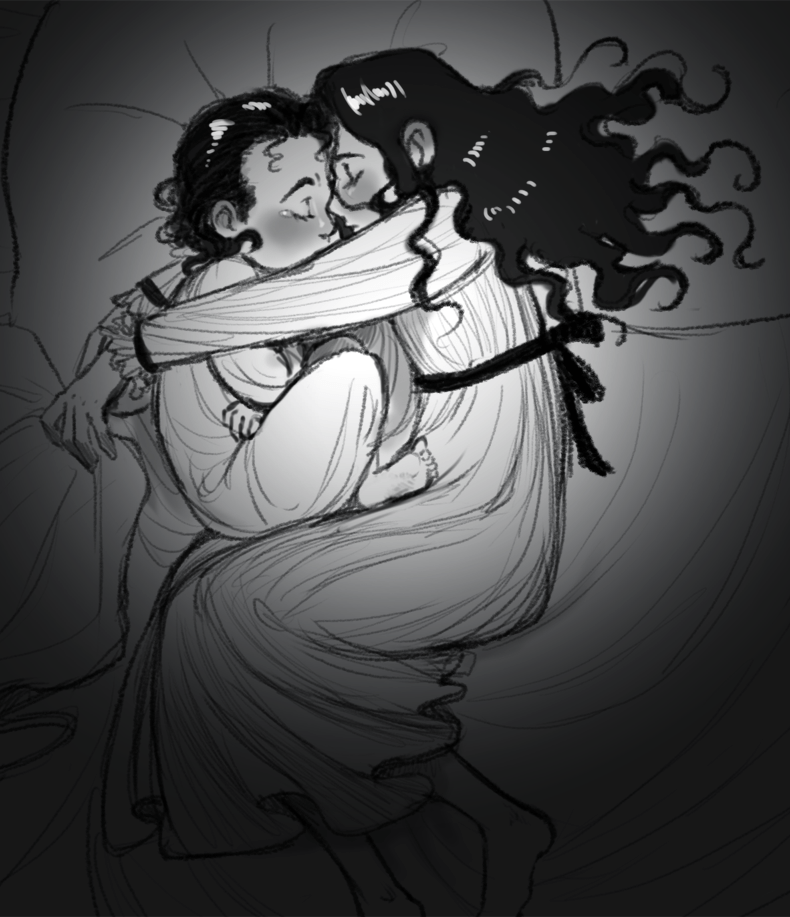
FIC: Crimson Peak Revisited
Always looking to the past ~ A journey into the lives of Sir Thomas and Lady Lucille Sharpe.
[MATURE AUDIENCE ONLY: Trigger warnings apply]
Feedback is always welcome.
Chapter 3 below~
CRIMSON PEAK REVISITED
CHAPTER 3
Lucille stifled her gasp of pain as she removed her clothes
and pulled on her nightgown. She could barely raise her arms and her back felt
like kneaded bread dough, but her physical pain was small compared to her
heartache. Theresa, the source of all joy and love in their lives, was gone.
She hadn’t even been allowed to say goodbye. After Mother had meted out her
punishment and chased away their nurse, she had left them upstairs, locked in
their nursery bedroom with the declaration that they would not receive meals
that night, and if they wished to have them tomorrow, they had better behave.
Throughout the whole ordeal, Lucille hadn’t uttered a word nor shed a tear,
even after the door had shut them in together, alone. She felt like an empty
shell of a thing; it was as if something precious and hopeful within her had
died, and was now just trampled and ruined.
Thomas rubbed his tearful eyes and sniffled. “I want
Theresa,” he whimpered. He didn’t protest as Lucille led him to his bed,
undressed him and put him in his night shirt. “How could Mama send her away? We
need her.”
“Theresa is gone,
Thomas. It is just you and I now.” Lucille sighed as Thomas’ eyes filled with
tears once more. “It doesn’t matter; she would have left soon in any case. You
aren’t a baby anymore; she’s got her own family that will need her more.”
“That’s not true!” Thomas contradicted. “We’re her family.
She’s ours.”
“Don’t be silly,” Lucille insisted. “Anyway, there’s nothing
we can do about it, either way. Since we aren’t having tea or supper, we should
just go to bed.”
“We’ll die up here,” Thomas predicted. “We’ll starve to
death. They’ll just lock it all up and leave and forget all about us.”
“No, they won’t. You’re the heir to Allerdale Hall; they
shan’t lose you. And we’re together, aren’t we? It’s not all that bad, so long
as we have each other.”
“Everyone says I’m perfect, sister, but I’m not; I’m awfully
wicked! I ran in the hall and broke the jar, not you. Oh, why did you lie,
Lucille? Didn’t it hurt?”
Lucille grimaced. Of course it hurt, but she wouldn’t admit
it to anyone, especially her beloved little brother. She lifted his quilt and
Thomas slid inside. The quarrelsome sound of their parents had begun to drift
into the nursery from below, their angry words beginning once again. It was a
weird cacophony of noise, and it reminded Lucille of the storm and its raging
thunder. Stiffly she slid under her own covers, rolling onto her belly.
“Lucille?”
“What is it, little brother?”
“Would you tell me a story?”
Lucille sighed. “I haven’t the head for it tonight,
sweetest. How about I sing to you instead, hm?”
“All right,” Thomas nodded.
Softly Lucille began to sing Theresa’s old lullaby,
repeating it over and over. By the time she came to just hum it wordlessly,
Thomas was fast asleep again in that innocent, babyish way he had. No doubt he’d
be awake before the sun rose, but Lucille didn’t care. There was nothing to
look forward to tomorrow. It was only then that her tears welled up and her
sorrow burst from her as she stifled her sobs into her pillow.
**
As she anticipated, the siblings weren’t forgotten in their
nursery, but they were neglected. To Lucille it felt like a return to life
before Thomas, with whichever available servant tending to their physical needs
and them being told to behave and stay out of the way. For weeks Lucille would
cry herself to sleep, aching for her lost Theresa. However, Lucille was older,
and she had someone on which to focus her attention and affection: her brother,
Thomas.
Oddly enough, the parental neglect allowed them more freedom
than they ever had, so long as they didn’t interfere with the rest of the
household. It was wonderful during good weather, for they were bundled up and
sent out of doors with the admonishment to Lucille to look after her cherished
brother. They would roam all over the estate, walking or riding Lucille’s pony.
They collected little bits of flora and fauna and even played in the Roman
ruins half-buried in the hills. They were forbidden to form any friendships with
the servants, although Lucille continued her domestic sessions in the kitchens
on baking days. She continued making her little cosmetic concoctions and
transmitted to Thomas the herb lore Theresa had imparted to her. Thomas also
learned his letters and numbers quickly, and proved he was quite crafty
constructing makeshift toys and other distractions for them during the times
when they remained indoors in the nursery.
A fresh vein of clay was found on the estate, as close to
the house as to be right under the gardens by the kitchen. Soon the driveway
was dotted with activity, a kiln built to the side of the stately house, with a
constant flow of industrial traffic. The children were never allowed in the
mines themselves, of course, and they were warned away from the muddy holding
pits, even though they could see the rows of local children, some even as young
as they were, descending into the mines day after day, to work on excavating.
They mourned the loss of the trees and gardens, but merely ventured farther
a-field, and learned to fashion bits of pottery of their own out of the deep
red clay. It stained their hands and they came to love the sensation of it: the
scent, the various textures, even the taste of the iron-rich material.
They observed the world of people outside their nursery with
a distant curiosity, like Rapunzel in her tower. The parties at Allerdale Hall
became all the more extravagant, more elaborate dinners and dances, but they
only glimpsed at all the finery from their eyrie, muted music and festivities
filtering up to them from below. For the most part the children didn’t care
that they were excluded; they were content to live their lives together,
separate from the realm of their parents and other adults.
Despite the lack of constant supervision, Lucille and Thomas
were still given some instruction in proper manners in a haphazard way. Perversely
they weren’t provided with a governess for several years; Lucille took this as
yet another spiteful insult from their parents. She was nearly eight years old,
and Thomas six years old, when they were informed that a tutor had been hired
to see to Thomas’ education at Allerdale. Lucille was pleased to learn that she
would be allowed to attend during the tutor’s instruction provided she behaved,
and she was to be given lessons in areas suited for a lady: music, watercolor
painting, poetry and French. Lucille
suspected it wasn’t due to any newfound parental concern that they were
provided with a formal education; rather, it was due to Mother’s pressure and
Father’s increasing wealth and prestige. She didn’t care what was the motive:
Lucille in particular wished to become the perfect little lady, for then she
could show everyone, from her parents to the high society of the guests, that
she was just as worthy of the Sharpe name as her adored brother.
Perhaps the tutor had expected less of his students due to
their previous lack of formal instruction; they soon proved him wrong. Thomas
was a quick and clever student and Lucille even more so, although she was not
allowed to actively participate in any way. The siblings were serious and
dedicated in their studies. Determined to impress their parents and being
gifted with a superior intellect, they excelled.
Yet all their efforts were in vain. Father never had any
patience for anything domestic, and was abroad all the more. Mother remained in
residence more often, however, and Lucille did not escape her notice. Instead
of bestowing long sought after praise on her daughter, Beatrice instead
criticized her, bitterly announcing that all her wit, charm and talent would
amount to nothing. “What good does intelligence and graces do for a woman, if
they are unable to serve her well in life? You are far too willful and
sensitive a girl to make a proper wife. Not that your father would ever see fit
to arrange for a proper union; he would not furnish you with a dowry in any
case, should there be anything left from all his frivolous expenses when you
come of age. It is all for Thomas. Resign yourself to spinsterhood, girl; would
that I had!”
The meaning behind such cruel words was soon apparent: items
were soon missing from the house, and then came a reduction of the staff at
Allerdale Hall. It did not take long for Lucille to discover the truth: Father
had gambled too greatly. His investments overseas had failed to show profit;
their wealth had been greatly reduced. Sir James was now depleting his house of
its fine trinkets and depriving his family. There were to be no more parties,
no more dinners. Despite the loss, Sir James drove his workers to increase
production, urging them to delve deeper and extract more and more from the clay
mines; he was almost a demon in his frenzy. Nothing appeared capable of
stopping him: weather, time, or safety was of no concern to him. It was
inevitable that tragedy would occur.
The first snows of winter had fallen, and the mines should
have been closed for the season. Sir James had returned from months abroad, and
had not only refused to shut them down, but worked the miners day and night
with a furious drive bordering on mania. They were digging deep beneath the
white blanketed surface, a mass of humanity that quickly began to look like soldiers
fighting a bloody battle, stained with the crimson clay residue. There was a
rumble and roar, as if the earth itself shrugged and cried out as the mine
collapsed.
Screams tore through the air as the men and boys burst from
the muck and rubble, only to turn around to tear away at the debris. The snow
was churned into a blood-red mud as they unearthed the bodies of those
unfortunately caught underground. At first they found survivors, pulled from
the ground like a biblical resurrection, but as the day went on and the snow
began to fall again, all they found were the dead. Most of them were young;
just boys not much older than was Thomas, and each retrieved body was gently
laid out on the fresh snow. Beneath them, the mud leeched through the drifts,
staining the icy flakes in feathery streaks.
Thomas and Lucille dashed to the window when the tremendous
rumble first tore through the ground, making the whole house shake and its
occupants cry out in fear. It felt as if an earthquake had rippled across the
entire mountain, and then the screams of pain and terror began as the survivors
clawed and crawled free of the collapse. Their tutor had rushed to the window
to view the carnage himself, and had vanished down the stairs with the demand
that they remain upstairs in their refuge and stay away from the site.
Thomas had watched in horror and fascination from his
vantage point in the attic as the clouds thinned at sunset and threw the
macabre scene into stark relief: each crushed little body set out and sprouting
wings. He saw that, and he saw more: how each of them seemed to burn, vivid red
smoke curling up from the bodies. These confused souls seemed to twist in the
air, and some—some stared up toward the house, toward his window, toward
him…! It could not have been real; just some horrible trick of his mind; a
macabre imagining–Thomas tore his eyes away from the window to turn toward
Lucille, to confirm she saw the same gristly sight.
Lucille didn’t seem to see the horrific visions; she put on
her cloak, gathered some things and announced she was going to help. “I can
assist with the injured,” she declared importantly.
Thomas was terrified. “Don’t go!” he exclaimed. “We aren’t
wanted. Besides, I need you here. Let the others care for them.”
“Stay then,” Lucille sniffed, “if you don’t wish to get your
hands dirty. I doubt Father will care for them either way, but I’m going to
help do as I can.” And then she left. Thomas watched helplessly as she appeared
far down below, walking across the snow and kneeling next to one of the
exhausted foremen. She wiped the crimson muck—whether it was blood or mud was
uncertain—from the broken man and fished through her collection of jars for something
to rub on his wounds. Thomas focused all his attention on her, ignoring the
mangled pile of bodies and imagined spirits.
Thomas watched as it grew dark, even after they lit lanterns
and built fires, until he couldn’t stand it anymore. Food and routine had been
forgotten, not that Thomas could stomach the idea of eating. It was completely
dark when Lucille finally crept back into their room. They quickly prepared for
bed and pulled the covers up. Lucille was quieter than usual, no childish
banter or humming between them. Even after she had snuffed the candle, they lay
on their beds in the dark, subdued and lonely.
“Lucille,” he whimpered. “Are you asleep? I can’t sleep. I’m
scared. The boys from the mine…”
Lucille slid out from under her covers and padded barefoot
across the floor to his bed. Her hair was plaited into a single thick braid
behind her, her nightgown buttoned high at her neck and wrists. She sat next
him, pulling her feet up under her to keep warm. “Those boys can’t harm you,
Thomas. They’re dead,” she said matter-of-factly. She was only two years older
than he, but she was very pragmatic. “Father should have closed the mines
before the snow fell. “
“Why didn’t he?” Thomas asked.
Lucille fell silent, not willing to answer her brother.
Their father was a rare presence in their lives, fortunately, but when he was
home he terrorized everyone within it. The onset of winter was always the
worst: it was almost as if he was compelled to migrate to his ancestral home,
and detested being there. His vicious feuding with their mother and disdain for
his offspring would fill the rooms like a miasma, making the gloomy frigid
months all the more cold and miserable. “Who can say why Father does anything?”
Lucille answered with some bitterness. “I doubt even he knows. But you needn’t
be scared of him or those unfortunate lads now. Go to sleep.”
“I can’t, Lucille; I can still see them on the snow. They’re
lying out there, looking at us.”
Lucille made an exasperated noise. “They aren’t, Thomas. They’ve
taken the bodies away, and it doesn’t matter; they’re dead. Maybe they have
become angels.”
“Do angels have red wings?” Thomas countered. “Do they float
in the air like smoke?”
“So you say you can see them, as what, Thomas? Ghosts?
Spirits?”
Thomas frowned at his sister’s mockery. “I know what I saw,
Lucille, even if you don’t believe me.”
“Oh, Thomas, come here,” Lucille urged him, softening her
tone. She drew him, blankets and all, into her arms. “It doesn’t matter what I
believe. We can make up any story we like, with our magic and imaginations, can’t
we? Perhaps the souls of those boys have grown moths’ wings and will fly up
here to play with us. They won’t have to work in the dark mines underground
anymore; they’ll be our friends. Wouldn’t that be better?”
Thomas settled against her shoulder and nodded. He much
preferred it when Lucille made up stories or sang for him instead of argued and
was bossy. That was when they were the happiest. Thomas was only eight years
old and Lucille wasn’t yet eleven, but he had accepted that his sister was
mature beyond her years and trusted her implicitly. Even knowing the truth, he
would rather believe Lucille’s stories. It was far more comfortable to live
above all of the ugliness, safe and secure in their own illusions of a secluded
existence with only each other for solace, than to consider the reality beyond
the nursery confines.
FIC: Crimson Peak Revisited
Always looking to the past ~ A journey into the lives of Sir Thomas and Lady Lucille Sharpe.
[MATURE AUDIENCE ONLY: Trigger warnings apply]
Feedback is always welcome.
Chapter 2 {below}
CRIMSON PEAK REVISITED
CHAPTER 2
…Today was a most lovely day. The sun was bright and
warm, with the calmest breezes—the flowers are all a-bloom in the wildest riot
of colours. I was moved to take the children for a walk, as that is so rare a
treat for them. Master Thomas enjoyed it immensely. He is at last able to
toddle down the lane without much assistance and pranced along like a Spring
lamb. Miss Lucille, being as well behaved as she is, was more content to walk
beside me, but was ever curious about every single sight, flora or fauna. The
little girl has the most impressive curiosity of the natural world—had she been
born a lad, I believe she would become quite the scholar or even an explorer of
some renown.
Both the children have superior intellects; the signs of
all their good breeding are forefront. Master Thomas has an excitable nature,
however, which I have, sorry to say, indulged to an unusual degree. It is, I
suppose, maternal weakness on my part but the children are so very alone in
this whole dreary house and I do miss my own little ones. I have never seen a
more loveless place for all of Allerdale Hall’s grandiose refinement. Despite all
of my softness, I don’t feel that I’ve spoiled them. Rather the contrary—I act
toward them as if I was their own loving mother and the darlings have responded
with a total devotion. Poor lambs! They are certainly beautiful children. I
only hope that in time their childish exuberance is tempered into a more
sedate, dutiful maturity. At least I shall have done my part in providing them
with some health and cheer…
The nursery in the attic had become a little idyllic kingdom
of its own, behind its religious murals high above the maze of corridors and
fine wood detailing. Allerdale Hall was a vast place, a castle and fortress of
sorts, a monument to privilege and industry. The children were carefully kept
apart from it, locked away like a horded treasure; it was only on the rarest
occasion they were granted permission to venture into the forbidden floors
below, and never without their chaperone, Theresa.
Sir James Sharpe was the model of his genteel station,
having been raised as the heir to Allerdale Hall. He never had reason to
question his privilege, being born as he was to the gentry and enjoying its
benefits as a matter of course. Yet he learned far too soon of the obligations
that burdened him as the sole heir of the estate.
Every son of the Sharpes had been educated to the proud
history of Crimson Peak and the legacy of Allerdale Hall: from its founding on
the remains of a Roman settlement and the prized crimson clay pits hidden
beneath the rolling hilltop, to the granting of the title of baronet to his
industrious ancestor, Sir Edward, by Queen Elizabeth herself, to the fabulously
successful growth of the clay works and masonry. It was of great pride to the Sharpes that
their family supported almost the entire economy of Crimson Peak: their empire
included the clay pits and mines, the kilns and factory, the transport of
bricks, masonry, potteries and other ceramics, and the estate of Allerdale Hall
with the employment of so many servants and groundskeepers. Their influence
extended to even to the little town of Farlam with its train station and the
surrounding farms. For all this, the Sharpe heir was responsible to its
continued success, and if possible to increase the wealth and prosperity of
their position in the gentry.
It was a tragic misfortune that placed Sir James as the sole
heir. His brother, Sir Henry, had purchased a commission with the East India
Company as a means of furthering the family businesses, and had been quite
successful at it, much to the approval of their elderly father, but when James
had barely come of age news reached them that Henry’s ship had been lost in the
Indian sea. Home had been a lonely place before that, as both of his sisters
had died before their brothers–there had been an elder daughter who had not
survived what was to be her first child, who also perished—the same fate that
befell James’ mother, who died birthing their younger sister—and the loss of the
youngest Sharpe girl to a dreadful fever before her fourth birthday had made
Allerdale Hall all the more somber, but the death of Henry broke both the
hearts of James and his father. Henry
had been a smart, steady man, filled with promise and a head for business.
While James had an easy charm, he was far less reserved and more impulsive; it
had never occurred to him that he might be called upon to shoulder the burden
of the Sharpe inheritance alone. Yet it was precisely that which happened when
his father passed away when James had barely entered his twenties.
At loose ends and still mourning the loss of any other
family, James was required to assume his responsibilities as the sole heir of
Allerdale Hall. There were many underlings already in place, fortunately, and
James came to rely on them heavily. He was advised to seek a domestic
arrangement as soon as he could—he had become one of the most eligible
bachelors in Cumberland, if not Britain entirely. These social events provided
a much-needed distraction for the young baronet; he immersed himself in his new
status with an abandon that soon concerned his bankers.
It was not all romance and pleasure, however. Desirous of earning their fees, the chaperons
were hard at work arranging suitable matches for their charges, with Sir James’
attentions being the most sought. It seemed however, the more pursued the man
was, the more he rebelled his obligation; he appeared to prefer the revels and
frivolities of such occasions over the consideration of future domestic
possibilities. It was with some surprise that he found the company of the
spinsters from Whitehaven agreeable, especially over those of younger and
merrier temperament.
Lady Beatrice and Miss Florence were the perfect examples of
their gentle sex, with all the social graces and manners of their status. The
eldest, Beatrice, was the more sought of the two, a charming, intelligent lady with
a quick wit and superior talent, but her sister, Florence, was blessed with far
better appearance and shy sensitivity. Neither was frivolous by any means, but
Beatrice had long had influence over her meeker sister and commanded a great
deal of her loyalty. Florence’s company might have been more delightful had she
not been shadowed by her domineering sibling, but as they had no mother alive,
the younger relied on the elder for all advice and guidance.
At their mother’s passing, Lady Beatrice had taken to her
familial duties with a commitment that belied her tender age. She proved to be
quite capable to the task, too, but the burden was a great one and the lady so
severe that it robbed her of much of her youth. Florence, too, was well
educated and benevolent, known for her kindness and humility. Both were talented
in the musical arts and entertaining company. In addition the two were the only
children of their fine family and of their father’s line, and thus heiresses to
their father’s large holdings. The ladies would provide valuable unions, if
they had only allowed it, but the chaperones could only wring their hands in
despair as years past with no success. There was rumour that Lady Beatrice was
determined to remain unattached, and her sister would not dream of marrying
before her, without her blessing.
I was because the ladies appeared content in their
spinsterhood there was little concern when Sir James was increasingly noted in
their company. Yet the shrewder of the chaperones were not fooled when the young
Sir James proposed to Lady Beatrice; the marriage of two of the richest mining
families of Cumberland was a financially wise union. There was gossip that Sir
James had desired Florence over her sister, but that Beatrice had quelled the
romance and usurped her sister’s place in order to obtain the larger part of
their inheritance. Truth was that the younger sister, Florence, had been the preferred
choice, but the decision to uphold propriety by marrying the elder sister in
place of the sister more likely to produce an heir was applauded. Love had
nothing to do with the matter.
By marrying, Lady Beatrice brought the majority of her
family fortune into her marriage, leaving her sister with a much reduced but still
comfortable allowance. The prospects for Florence finding a good match also
decreased, but Florence continued her sister’s instruction on the care of her
expenses; in truth, for herself she could have gotten by on even less. What
made her bitter was the separation from her beloved sister, for as soon as
James and Beatrice were wed and away to Crimson Peak, a growing distance began.
Florence felt abandoned and friendless, retreating to a lonely obscurity in a
smaller home in Whitehaven and rarely venturing out save for church or
charitable works. Despite the gossip, Beatrice’s break with her cherished
sister was more likely due to Sir James’ control than from any imagined
rivalry.
Unlike many ladies who married late, Lady Sharpe didn’t seem
eager to produce an heir. Sir James didn’t appear overly concerned, but it was
common knowledge that marriage in no way settled his roving, carefree ways. At
least he was discreet and didn’t have any offspring from his dalliances, but
the coldness between the two led to the assumption that either they were unable
or simply unwilling to have children at all. The Sharpes made up for their domestic
deficiencies by excelling in their wealth—a new source of the deep red clay was
found on Crimson Peak itself, near enough to Allerdale Hall to warrant a mine
be dug within sight of the stately manor. Extravagant balls and seasonal
parties at Allerdale soon included tours of the newly built kiln and pottery
works on the property, all humming with the activity of fresh hires.
The increase in fortunes may have led Sir James to consider
the future, for it was with some surprise that two years after they were wed,
Beatrice was expecting a child. She was dreadfully ill during her confinement
and withdrew from society for the duration. When she failed to bear an heir the
rift between the two became even more pronounced. Sir James was quick to hire a
wet-nurse but Beatrice retired to London as soon as she was able, wanting to
resume her role of hostess over any maternal duty. The daughter was hardly seen
and not even given a proper nanny, so great was her father’s disappointment and
her mother’s resentment.
Sir James grew violent when at home, his temper explosive
toward his family and staff alike. He was deep in his cups, and wild with his
fortune and his company. It was no secret that he forced himself on his wife,
and would beat her if there was any refusal of his attentions. It was only when
Beatrice was once again with child that Sir James left off his attacks, but
with the warning that she had better produce an heir or die in the attempt. It
appeared likely she would—Beatrice remained in her bed for the length of the
gestation, through autumn and the long winter.
The birth of little Thomas brought some hope to Crimson
Peak, although it nearly killed his mother. Great care was taken in the
employment of a wet nurse for the newborn heir, with Sir James insisting on her
living at the house where they could monitor the child’s health and growth.
Thinking this would allow her husband to believe she should welcome more of his
attention; Beatrice openly refused to have anything to do with either the nurse
or her charges.
Perhaps it was for the best that the parents remained
distant from Thomas and Lucille. Under Theresa’s care the children flourished:
they were well-fed, clean and most importantly looked after and loved. Thomas
had not been an easy baby, either; he had cried often, only consoled when held
and nursed. He was a delicate infant, but Theresa was a strong and determined
woman, and within two years Thomas and Lucille had grown into healthy, happy
children. The rest of the staff disliked her, finding her too free and cheerful
in her position, and too common in station to be of consequence; they resented
how much Sir James favored her with anything she requested for the children.
…Lucille has excelled with her letters and sampler, and
has shown a great deal of proficiency at concocting balms and salves and other
herbals. She is most content when occupied with some creative endeavor or
reading. Both children have the most avid imaginations—they delight in my
telling of stories and fairy tales, and often sing and dance in little skits of
their own devising. The darlings are so sweet and affectionate to each other
and to me, I almost regret that they will outgrow my care. Lucille will suffer
the greater for it, although Thomas is only recently begun to wean. Lucille
would be a blessing to any mother, the girl being attentive and capable, and l
love her as if she were my own. Yet I fear her passionate nature will not serve
her well in such a house as this…
Returning from the stables, Lucille raced ahead as Theresa
carefully led Thomas up the stairs to the attic. They had spent the day
outside, in the abundant sunshine. Thomas had laughed, running through the tall
grass of the meadows and avidly watched ants marching on an anthill while his
sister rode her new pony, a birthday gift from their father, but the gathering
clouds on the horizon had forced them back indoors for a gloomy evening of
rainstorms. Lucille loved the late afternoons and evenings; teatime and suppers
with Theresa, with food and sweets and story time by candlelight or the light
of the fire. Their parents were away, and that always made things a little more
tranquil, but Lucille missed curling up beside Theresa as Thomas nursed and
Theresa quietly sang lullabies.
Despite the rain lashing the windowpanes and the wind
moaning over the rooftop, Thomas fell asleep quickly. Lucille took longer,
pulling the quilts up around her and asking for yet another story, but when she
fell asleep she dreamt that she was a beautiful princess surrounded by little
sprites, and they danced around a bonfire by the sea, with the dark waves
crashing on the shore beside them. Theresa was there, chanting and clapping her
hands, with red and gold flowers in her hair and covered with a sealskin cloak,
and Thomas was patting a mound of sand and chuckling. The waves grew more
violent, and in the flash of the lightning she could see a ship floundering far
off on the water. The little sprites flew up into the air like flame-bright
sparks and Thomas began to cry, the water bubbling up and washing away his sand
castle; Theresa turned into a seal and the flowers fell from her hair. Crash!
The waves swelled, and Lucille ran over the razor-sharp shells and wet seaweed,
wailing for her brother and nurse…
Lucille woke abruptly, eyes snapping open. The nursery was
dark, the angled timbers of the ceiling like a sheltering tent above them.
Lightning flashed and the wind howled outside. Lucille crept from her bed and
padded to the door. Feeling her way across the parlour, she went into Theresa’s
room and crawled into bed next to her.
“What’s a-miss, sweetest? Did you have a bad dream?” Theresa
murmured, pulling the frightened girl to her. “There, now, it’s all right. Rest
you now; it’s only a storm; it will pass. Your brother’s still slumbering,
isn’t he?” Lucille nodded, sniffling. “Oh, now, a big girl like you, weeping?
No more of that; shall I tuck you back in bed?”
“Might I stay the night with you?” Lucille asked. Theresa
had let her do that before, and she wanted the close comfort of her nearby.
Theresa thought there was no harm in it, and lifted the quilts for Lucille to
burrow beneath. Lucille curled against her, listening to her steady breathing
as she fell back asleep and to the growl and rumble of the storm outside, until
she too fell into a fortunately deep and dreamless slumber.
***
They woke the next morning to the sight of Thomas in his
nightshirt, socks slouched around his ankles and dark locks in wild disarray,
gnawing on a piece of buttered toast and tugging at Theresa’s covers. Lucille
was still curled against Theresa’s side, her head resting on her soft chest
where her gown was undone. The fire in the brick furnace was freshly stoked and
burning bright, making the room welcome and warm despite the still overcast
sky. Theresa sat up with a small cry at the lateness of the hour—they had
overslept! The maid had already been in to kindle the fires and set out their
breakfast; Thomas never slept long for all of his soundness, so he must have
been up for some time. “Help with my egg, please?” he requested.
“A moment, Thomas,” Theresa admonished. “You aren’t dressed
yet, and neither are we. Is the water still hot for the washing?” Theresa rose
in a hurry, urging Lucille up and rushing about with some agitation. Wrapping
the children up in their robes, she allowed them the rare treat of eating
breakfast in their night clothes before the morning ritual of washing and
donning their garments. Having slept well, Thomas was full of energy and
wouldn’t keep still; it was a battle to comb his hair into any semblance of
neatness. Lucille was more sedate, but she tended to enjoy having her hair
brushed, anyway. Theresa had gotten herself properly attended to and was tidying
up the breakfast things when they heard the piano music from downstairs. Mother had returned from town!
Theresa was frantic; no doubt she’d be expected to report to
the lady of the house as to the progress of the children, which Lady Beatrice
always took with a complete air of indifference. Admittedly Theresa was usually
quite carefree and lenient with the children, but she didn’t wish the Sharpes
to think that she was in any way lazy or inattentive to her charges.
“May I go riding again today?” Lucille asked hopefully.
“I doubt very much that the weather shall permit it,”
Theresa answered, handing her the embroidery hoop and half-finished sampler.
“Where has your brother gotten himself to?”
A fit of giggles came in reply to her fretting, and Thomas
dashed away down the corridor. “You little imp!” Theresa cried, giving chase to
her mischievous charge. “You mustn’t run in the house! It is not time for silly
games, lad; come back here this instant!”
Grinning, the boy glanced back at her as he rushed
forward—and ran right into the maid coming up the way to collect the breakfast
things. Wheeling back, he collided with a marble-topped table and sent the ginger
jars displayed on top of it to the floor with a crash. Having followed after
them, Lucille gasped as one of the jars missed the carpet and shattered over
the floorboards.
Thomas froze, and then burst into tears. In a flash, Theresa
had gathered the toddler up in her arms, shushing him. “I am so sorry!” she
apologized, trying to herd the children back into the nursery. The maid frowned
in furious displeasure, muttering as she set the unbroken jar back and bent to
gather up the shards of expensive pottery.
“That was very wicked of you, Thomas!” admonished Theresa.
“And today of all days!” She knew she should punish him, but she couldn’t bring
herself to do so; he looked so contrite and frightened. “Come let me clean your
face. You shall have to give an apology to Betty when she comes in, but for all
our sakes, please sit quietly and look at your book for now. Did you not hear
that your mother is returned?”
They spent the morning in the attic nursery hiding like
frightened rabbits. Betty came and whisked away the dishes, accepting Thomas’
apologies with a silent and tight-lipped disdain. “You should mind Master
Thomas better, between the two of you,” she chided, addressing Theresa and
Lucille. “There’s enough to be done in this house as it is; all the more so
when Sir and Milady are returned. They will want a report at teatime, no doubt.
I’m off, then; too much to do!”
News of Sir James also being home filled Theresa with dread.
Having both master and mistress under the same roof was rarely harmonious, and
Sir James was an intimidating man in any case. The sitting room was close and
stuffy, and the children were anxious. Toys couldn’t distract them, nor could
any promise of music or fairy tales. It was with some alarm that there was an
unexpected rapping on the nursery door before tea time, causing them all to
startle. Theresa rose to answer.
Lady Beatrice Sharpe stood in the doorway as cold and
unmoving as a marble statue. The shock of the invasion, with her piercing gaze
and aloof demeanor, made Theresa shy back from the door, reaching behind her
for the children. Her mistress had never before deemed to visit the nursery,
not even to the parlour. “W-welcome back, Lady Sharpe,” Theresa stammered.
“Children, greet your mother—“
“Spare me the niceties, nurse,” Beatrice snapped. “Bring
your charges into the sitting room at once. I’ve heard of some concerning
irregularities in this nursery and I shall have them addressed at once.”
Gathering the wide-eyed children to her, Theresa followed
behind her mistress with her heart beating wildly. In front of them Lady Sharpe
turned and swept into the front room, seating herself upon the sofa. Without
preamble she began. “It had been brought to my attention that an object of some
worth was damaged this morning—damaged beyond repair, I am informed—due to the
unbridled wildness of the children. Is this true?”
Not knowing what else to do when so confronted, Theresa
nodded. “Yes, milady, it is true, but Betty has granted her forgiveness; it was
a mere accident—“
“That is not the heart of the matter; the jar is now spoiled
and its replacement doubtful. You were derelict in your supervision of the
children; have you at least administered a proper punishment?”
Theresa dare not look up at her employer, lest the truth be
read in her expression. She hadn’t considered the value of the jar, having
thought only that the slight to Betty should be addressed. No doubt it was a
very expensive item.
“I assume you have not,” Beatrice continued without pause.
“Very well, I will take the matter into my own hands, and the boy should
consider it a mercy that it is I rather than his father that administers it.
Fetch me a switch!”
Thomas clutched at Theresa’s skirt in terror, teary blue
eyes as wide as saucers, and Lucille squeezed her hand. Theresa swallowed hard.
“We haven’t a switch, milady,” she replied quietly.
“No switch! How else have you beat them? A belt, then?”
“I do not beat them, milady; there is no need.”
“No need? Master Thomas is heir to this estate and has been
placed in your care with the understanding that he be given a decent and moral
upbringing, not spoiled and allowed to run amok. And the girl—I was told Miss
Lucille was found in your quarters this morning, asleep in your bed, upon your
very breast. Is it true then, that you have grossly indulged them?” Theresa
paled at this accusation, rooted to the spot, helpless to defend herself. “Fetch me a belt, woman, and we shall the end
of this.”
Lucille released her nurse’s hand and boldly stepped
forward. “Please, Mama, it was my entire fault, to both…I crept into nurse’s
room while she slept; she didn’t hear me over the storm—and it was I that
chased after Thomas and broke the jar. I am so sorry, Mama…”
“You will address me as Mother, girl, and only when given
leave to speak,” Beatrice declared. “I can scarcely believe it to be true, but
whether it is or not, this is proof of your failure, Theresa. Go and bring me
that strap, and mind it is a sturdy one.”
“Oh, please, milady, allow me if there must be punishment,”
Theresa cried. As much as she couldn’t bear the idea of striking the children,
at least she could do what she could to soften the blows.
“Having already been too soft on them, I could hardly trust
you to be firm now,” Beatrice retorted. “You may consider it your last act of
your employment. Bring it here and then leave this place immediately. Your
services are no longer required.”
Theresa stood aghast. Numbly she detached Thomas from his
grasp on her skirts and moved like a sleepwalker to fetch a belt that would
meet with Lady Sharpe’s approval. She was not allowed to hold Thomas as Lucille
was told to bend forward and grip the seat of a chair. Tears openly fell from
Thomas’ eyes as Beatrice raised the strap and brought it down over Lucille’s
backside again and again. Yet Lucille didn’t shed a tear or utter a sound, only
stared at Theresa, even when Beatrice paused to insist the woman leave at once.
The little girl’s glassy green eyes followed her as she, without so much as a
farewell, fled Allerdale Hall forever.

 Slutty Yorick