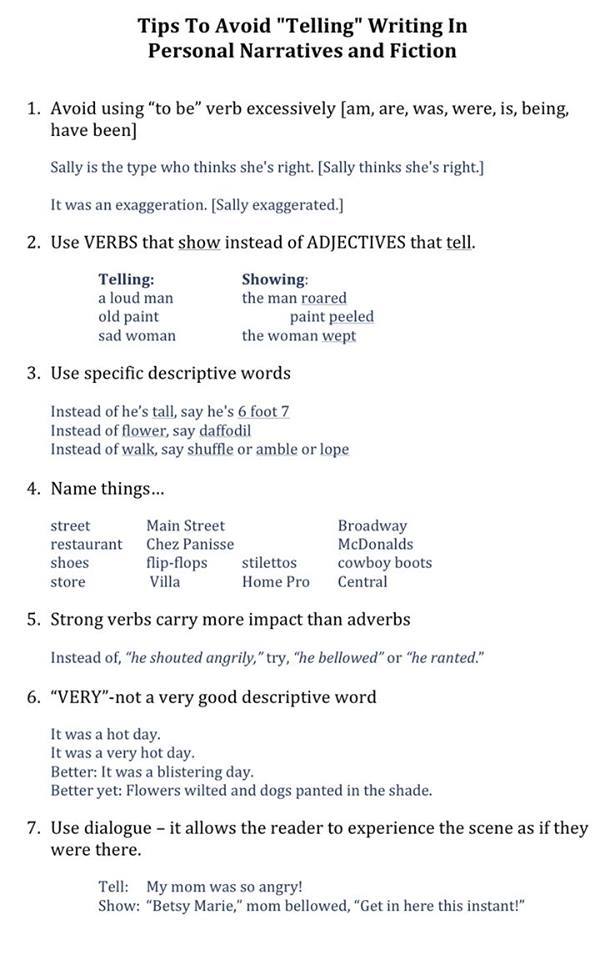
“Instead of tall, say he’s 6 foot 7″
Nothing pulls me out of a story faster than this kind of specificity. If there’s a POV character in play who can tell those things because it’s a trait of theirs–they’re a tailor, they’re a physical trainer, whatever–that works, but otherwise, it’s the kind of hyperdetail which is best not used unless it’s relevant to the story.
If a character’s extreme height is relevant, talk about it in other ways and sprinkle it around. Don’t say they’re 6′7 and expect that to be sufficient; it’s not. Describe them ducking through average doorways, sitting awkwardly in short furniture, complaining about their feet dangling off the end of the bed, about needing to shop at the extreme end of Big’n’Tall. Maybe the actual height comes up in dialogue or something, but it should be a facet of the story, not the way you tell people the character is tall.
“Instead of walk, try shuffle of amble or lope.”
None of those words means walking. None of those words means walk.
“Instead of flower, say daffodil.”
If the POV character would know it this makes sense–but they might not. This is an important thing to keep in mind when describing just about anything. Is your character ignorant of flowers? Maybe they have no idea what Amaryllis are, they just know them as “those huge trumpet-shaped flowers their parents always got around Easter and put in transparent vases with gaudy glass beads and a little water like a plant-themed science experiment”. Or a Lancer Evolution is ‘the neighbor boy’s absurdly loud, bright blue, thrumming car that crept over the neighborhood speedbumps’.
People might not know things, and it’s really important to their characterization to think about how they view those things they don’t know.

 Slutty Yorick